
This collection is curated by the UAE Look Team, a group of writers covering fashion, travel, food and living in the UAE and across the Middle East. Our team checks every price, place and detail before publishing, so you get honest, practical guides for Dubai and beyond.
The salary to live comfortably in Dubai depends on who you are bringing with you. A single professional can live comfortably on AED 12,000 to 15,000 a month. A couple without children needs roughly AED 20,000 to 28,000 a month. A family of four with children in school needs AED 30,000 to 40,000 a month at a comfortable level, and more if the school fees are high or the employer covers nothing. The city average salary sits around AED 15,000 to 18,000 a month, which tells you something important: the average Dubai salary buys a comfortable single life, a tight couple’s life, and a difficult family life unless the employer helps with housing or school fees.
This guide breaks down the real numbers by household type, by industry and by lifestyle, so you can judge a job offer properly instead of guessing. All figures are late 2026 data from recruitment salary guides, rental contract records and cost of living surveys.
What is the average salary in Dubai?
Dubai does not publish an official average salary for the private sector, so every number you see comes from recruitment industry salary guides, and they agree with each other more than you might expect. The average salary in Dubai in 2026 stands at approximately AED 15,000 to 18,000 per month, or roughly AED 180,000 to 216,000 a year. The median salary is closer to AED 13,800 a month, because a small number of very high earners in finance and technology pull the average upward. That gap between average and median matters: half of the people working in Dubai earn less than AED 13,800 a month.
Salaries rose roughly 3 to 4 percent from 2025 to 2026, and the Hays GCC Salary Guide reported that 48 percent of UAE private-sector employees received a pay rise in 2024, typically in the 2.5 to 5 percent range. Michael Page’s 2026 UAE salary guide, which covers more than 500 professional positions, found that over 60 percent of the roles it tracks pay between AED 10,000 and AED 40,000 a month. That is a very wide band, and it is the reason a single “average salary” number is never enough to plan a move. A detailed Dubai salary guide for 2026 breaks the same figures down by industry and lifestyle tier, and it is a useful cross-check before you accept an offer. What matters is your industry, your seniority and what your employer covers on top of the salary.
One thing makes every Dubai salary figure different from the same number back home: there is no personal income tax in the UAE. Your gross salary is your take-home pay, and that changes the maths completely. More on that below.
What is the salary to live comfortably in Dubai as a single person?
For a single professional, AED 12,000 to 15,000 a month is the baseline for a comfortable life. That covers a decent one-bedroom apartment in a mid-range area, groceries, transport and some dining out, with a little left over. Here is how that salary breaks down in practice.

A one-bedroom apartment in JVC, Business Bay or JLT costs roughly AED 5,000 to 8,000 a month in rent. Add AED 600 to 900 for DEWA and internet, AED 1,000 to 1,500 for groceries, AED 350 for a Metro pass or AED 900 to 2,000 for a modest car, and AED 1,000 to 2,000 for everything else, and you land at AED 9,000 to 14,000 a month before any fun. On AED 12,000 you live well but you do not save much. On AED 15,000 to 18,000 you live well and save steadily. On AED 10,000 or less, you can still manage, but only by sharing a flat or living in a cheaper area like International City or Dubai Silicon Oasis, where a studio costs AED 2,500 to 3,500 a month.
The line that decides comfort for a single person is rent. A median one-bedroom in Dubai, based on Dubai Land Department contract records, costs about AED 68,000 a year, or roughly AED 5,700 a month. That is about 38 percent of a AED 15,000 salary, which is manageable, but it is 57 percent of a AED 10,000 salary, which is not. If your offer is below AED 12,000, ask for a housing allowance or a cheaper area near your office, because rent will eat the salary otherwise.
What salary does a couple need in Dubai?
A couple without children should aim for AED 20,000 to 28,000 a month for a comfortable life. On AED 15,000 a couple can manage in a one-bedroom in a mid-range area, cooking at home and using the Metro, but there is little room for savings or a car. On AED 20,000 to 25,000, life opens up: a nicer one or two-bedroom flat, a car, regular dining out and a holiday fund.
The second income changes everything, of course. Two salaries of AED 12,000 each give a household AED 24,000, which is comfortable. But many couples arrive with only one partner working, because the second partner is still job hunting or on a dependent visa. If that is your situation, budget on one salary and treat the second income as a bonus when it arrives, not as part of the plan.
Couples should also think about the visa rule. To sponsor a spouse and family in Dubai, the sponsoring partner generally needs a minimum salary of AED 4,000 a month, or AED 3,000 plus employer-provided accommodation. That is a legal floor, not a comfortable income, and nobody should confuse the two.
What salary does a family need in Dubai?
This is where Dubai gets expensive, and where most salary guides are too optimistic. A family of four with one child in school needs a minimum of AED 25,000 to 30,000 a month, and AED 30,000 to 40,000 for a genuinely comfortable life. A family with two children in mid-fee international schools needs AED 35,000 to 40,000 at the very least, and one careful October 2026 household model put the comfortable figure at about AED 49,000 a month for a family of four with two children in mid-fee schools, assuming the employer pays nothing toward rent or schooling.
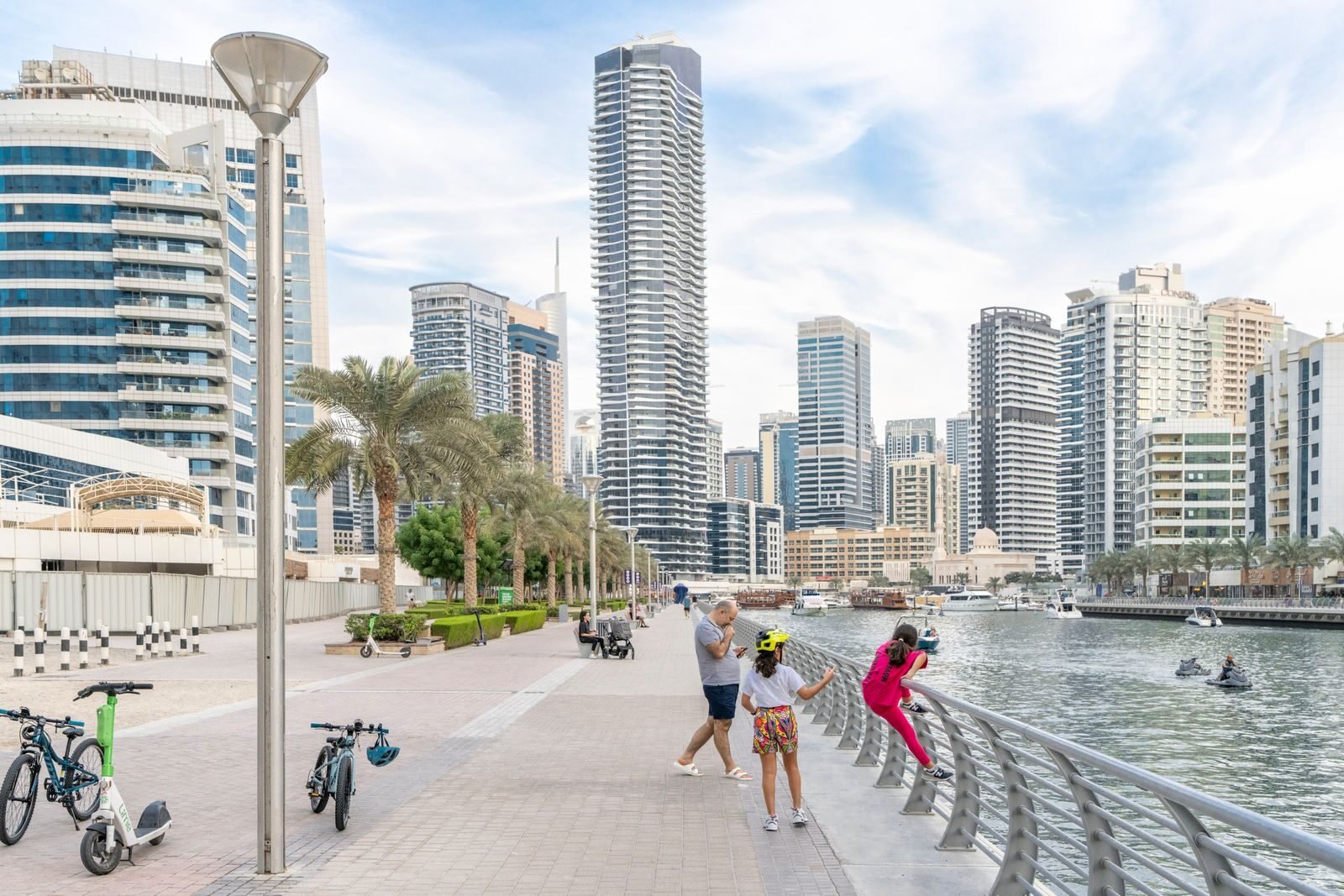
The reason is school fees. The average Dubai school fee for the 2026-27 academic year is approximately AED 42,000 per child per year, and fees rise with the year group. Two children in mid-fee British schools can cost AED 7,000 to 9,000 a month, which is more than many families pay in rent. Add a two-bedroom apartment at AED 8,000 to 14,000 a month, a car at AED 1,500 to 2,500, groceries at AED 3,000 to 4,500, and the total passes AED 30,000 before you have done anything fun.
The single most valuable question to ask a Dubai employer is therefore not about the salary number at all. It is: do you cover school fees, and for how many children? An employer who pays school fees for two children is effectively adding AED 70,000 to 90,000 a year to your package. Housing allowance is the second most valuable benefit, because a two-bedroom in a family area can cost AED 100,000 to 170,000 a year.
Salary vs lifestyle: what each pay band buys you
| Monthly salary (AED) | Verdict | What it realistically covers | Who it works for |
|---|---|---|---|
| 5,000 to 8,000 | Basic | Shared room or employer housing, Metro, home cooking. A median studio alone would take most of it. | Single workers with housing provided. |
| 8,000 to 10,000 | Liveable for one | A studio in a budget area takes about 30 to 40 percent of pay. Tight, but workable. | Singles living lean in their own studio. |
| 10,000 to 12,000 | Liveable for one | A studio takes about 31 to 37 percent of pay. Rent, utilities and internet come to about AED 4,650 a month. | Singles who are careful. Not enough for a couple paying their own rent. |
| 12,000 to 15,000 | Comfortable for one | A median one-bedroom is about 31 to 38 percent of pay. Room to save a little. | Singles who want a decent flat and steady savings. |
| 15,000 to 18,000 | Comfortable for one | A one-bedroom in a good area, a car or Metro, dining out, real savings. | Singles who want space and a social life. Tight for a couple. |
| 20,000 to 28,000 | Comfortable for a couple | A median two-bedroom is 31 to 43 percent of pay. | Couples without children. Tight for a family unless the employer covers housing or school fees. |
| 30,000 to 50,000 | Workable for a family | A two-bedroom is 17 to 29 percent of pay; a three-bedroom 30 to 50 percent. School fees decide how comfortable it is. | Families whose employer covers housing or schooling. AED 30,000 is also the Golden Visa salary bar for skilled professionals. |
| 50,000 and above | Comfortable for a family of four | A median three-bedroom, about AED 15,000 a month, is under 30 percent of pay, leaving room for school fees. | Families paying their own way in full. |
Use this table when you read a job offer. Find your band, then ask what sits outside the salary: housing, schooling, flights, medical cover. A AED 25,000 salary with school fees covered beats a AED 35,000 salary with nothing covered, for a family with two children.
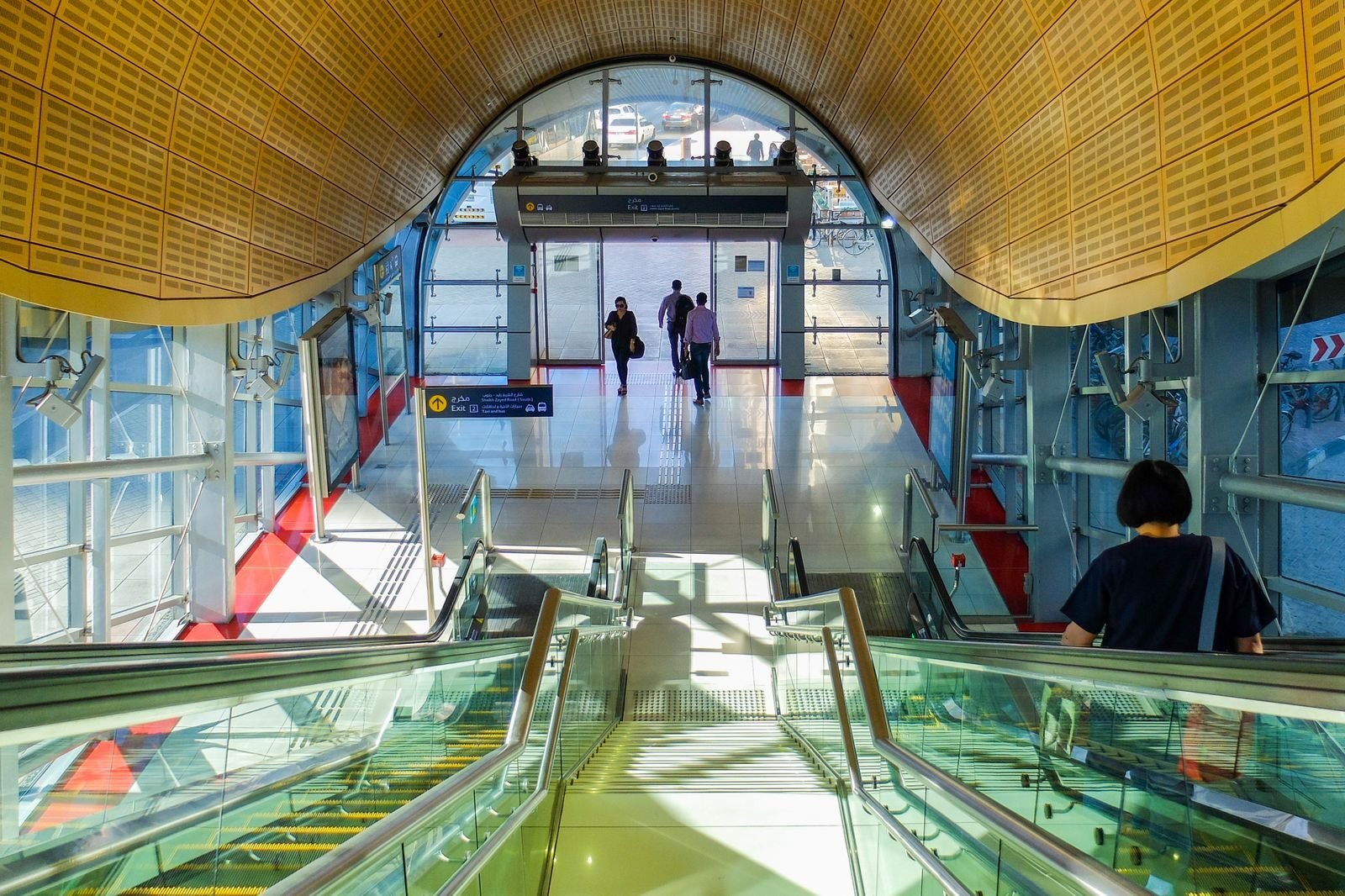
Salaries by industry in Dubai
Averages hide the spread, and the spread in Dubai is enormous. Technology engineers earn roughly AED 20,000 to 40,000 a month, depending on seniority and specialisation. Finance, technology and real estate pay well above the city average, while hospitality, retail and entry-level admin roles pay well below it. A senior professional in banking or tech can earn two or three times the city median, while a junior role in a service industry can pay under AED 8,000.
Experience matters as much as industry. A marketing manager with eight years of experience earns a different salary from a marketing executive with two, even at the same company. Nationality also affects pay in practice, which is an uncomfortable truth about the Dubai job market: identical roles are often paid differently depending on passport and previous salary history. When you research your number, look for salary guides that break pay down by role and seniority, not just by industry. This average salary in Dubai 2026 overview gives the same AED 15,000 to 18,000 average with a breakdown by sector and experience level. Treat any single figure as a starting point for negotiation rather than a fact, and check our Jobs and Careers guides for more on finding work in the UAE.
The tax-free advantage: what your Dubai salary is really worth
Dubai charges no personal income tax, and that is worth more than most people calculate. Take a AED 15,000 monthly salary. In London, a similar gross salary would lose roughly a quarter to income tax and national insurance, leaving about AED 11,000 in spending power. In Dubai, the full AED 15,000 lands in your account. That is why the average Dubai salary of AED 15,000 to 18,000 spends like a considerably larger salary in a taxed city, and why comparing headline salaries across countries without adjusting for tax is misleading.
The advantage is not unlimited. Dubai has no income tax, but it has a 5 percent VAT on most goods and services, Salik tolls, housing fees on your DEWA bill, and school fees that would be free in many European countries. The honest comparison is not tax versus no tax. It is what remains in your account at the end of the month after all the costs of living in that city. For a single professional or a couple without children, Dubai usually wins that comparison. For a family paying full school fees for two children, the answer depends entirely on the salary and the employer benefits.
What your salary has to cover that your employer might not
A Dubai salary has to stretch further than it first appears, because several costs that are free or subsidised elsewhere fall on you here. School fees are the biggest, followed by rent, which is paid upfront in cheques rather than monthly. Health insurance is mandatory, and while most employers provide it, the quality of cover varies, and upgrading it can cost you. Annual flights home are a standard benefit in many contracts but not all of them, so check whether yours includes them. And if you plan to stay long term, there is no state pension building up in the background, so your savings rate matters more here than it would at home.
A practical rule: whatever salary you accept, work out the monthly cost of rent, school fees, transport and groceries first, then see what is left. If less than 15 to 20 percent is left for savings, the offer is tight for your household size, no matter how big the number sounds.
How to negotiate a better Dubai salary package
Salary negotiation in Dubai works differently from many other markets, because the package matters more than the base number. Before you accept, ask for four things in writing: a housing allowance or company accommodation, school fee coverage and how many children it includes, annual flights for you and your family, and medical insurance that covers your family too, not just you. If the employer cannot move on the base salary, they can often move on one of these, and each one is worth thousands of dirhams a month.
Second, negotiate the rent cheque structure. If the employer pays housing as a lump sum, ask for it in a way that matches your lease. Third, ask about the salary review cycle and the End of Service Benefit, which is the UAE’s gratuity system: after one year of service you accrue an end-of-service payment, and it is a real part of your total compensation. Finally, get the offer in writing before you resign from your current job, and check the visa and labour contract details with the employer, because the offer letter and the official contract are not always the same document.
Can you actually save money in Dubai?
Yes, and this is the main reason most people come. A single professional on AED 15,000 to 18,000 who lives in a mid-range area, takes the Metro and cooks most nights can realistically save AED 3,000 to 5,000 a month. A couple on a combined AED 30,000 can save AED 5,000 to 8,000. A family on AED 40,000 with school fees covered can save too, though a family paying full school fees for two children will find saving much harder.
The people who fail to save in Dubai almost always fail for the same three reasons: they rent in Marina or Downtown on a salary that belongs in JVC, they run a financed car they do not need, and they brunch every Friday. Fix those three and the savings take care of themselves. Dubai is a city that rewards people who live one step below their income, and punishes people who live exactly at it. For the full monthly spending side of the same calculation, read our Living in Dubai guides, and the UAE Look homepage has our latest Dubai guides in one place.
What is the average salary in Dubai?
The average salary in Dubai in 2026 is approximately AED 15,000 to 18,000 per month, with a median closer to AED 13,800. Dubai publishes no official average, so these figures come from recruitment industry salary guides.
What salary do you need to live comfortably in Dubai as a single person?
A single professional needs AED 12,000 to 15,000 a month for a comfortable life, covering a one-bedroom apartment, groceries, transport and some dining out, with a little left to save.
What salary does a couple need to live comfortably in Dubai?
A couple without children should aim for AED 20,000 to 28,000 a month. On AED 15,000 a couple can manage, but there is little room for savings or a car.
What salary does a family need to live in Dubai?
A family of four needs a minimum of AED 25,000 to 30,000 a month, and AED 30,000 to 40,000 for a comfortable life. With two children in mid-fee schools, AED 40,000 to 50,000 is more realistic if the employer covers nothing.
Is AED 10,000 a month a good salary in Dubai?
For a single person it is liveable but tight, especially if you pay your own rent. For a couple or a family, AED 10,000 is not enough for a comfortable life.
Is AED 15,000 a month enough to live in Dubai?
Yes, for a single person it is a good salary that covers a decent flat, transport and savings. For a couple it is workable but tight, and for a family it is not enough unless the employer covers housing or school fees.
Is AED 20,000 a month a good salary in Dubai?
Yes. AED 20,000 a month is comfortable for a single person and for a couple without children. For a family with one child it is workable, but school fees will decide how comfortable it feels.
Is AED 30,000 a month enough for a family in Dubai?
AED 30,000 a month is workable for a family of four, especially if the employer covers school fees or housing. It is also the salary threshold for the Golden Visa for skilled professionals.
What is the highest paying job in Dubai?
Finance, technology and real estate pay the most on average. Technology engineers earn roughly AED 20,000 to 40,000 a month, and senior roles in banking, tech and executive management pay considerably more.
Do you pay tax on your salary in Dubai?
No. Dubai charges no personal income tax, so your gross salary is your take-home pay. There is a 5 percent VAT on most goods and services, and fees such as Salik tolls and the DEWA housing fee.
What is the minimum salary to sponsor a family visa in Dubai?
The sponsoring partner generally needs a minimum salary of AED 4,000 a month, or AED 3,000 plus employer-provided accommodation. That is a legal floor, not a comfortable family income.
Can you save money on an average Dubai salary?
Yes. A single professional on AED 15,000 to 18,000 can realistically save AED 3,000 to 5,000 a month by living in a mid-range area, using the Metro and cooking most nights. The biggest savings come from rent, transport and dining choices.
How much should I ask for in a Dubai salary negotiation?
Research the range for your exact role and seniority, then negotiate the whole package, not just the base salary. Housing allowance, school fee coverage, flights and family medical cover can each be worth thousands of dirhams a month.
Is it better to take a lower Dubai salary with benefits or a higher one without?
For a family, the lower salary with school fees and housing covered is usually better. Two children in mid-fee schools can cost AED 7,000 to 9,000 a month, which wipes out a much larger base salary difference.
#DubaiSalary #LiveInDubai #DubaiJobs #MovingToDubai #DubaiLife #WorkInDubai
This collection is curated by the UAE Look Team, a group of writers covering fashion, travel, food and living in the UAE and across the Middle East. Our team checks every price, place and detail before publishing, so you get honest, practical guides for Dubai and beyond.
One Response