
This collection is curated by the UAE Look Team, a group of writers covering fashion, travel, food and living in the UAE and across the Middle East. Our team checks every price, place and detail before publishing, so you get honest, practical guides for Dubai and beyond.
This Riyadh 3 day itinerary is built for a first visit: one day for the old city where modern Saudi Arabia began, one day for Diriyah and the new skyline, and one day out in the desert at the Edge of the World. Three days is enough to understand Riyadh, and this order works because each day stays in one part of the city instead of zigzagging across it.
The best time to come is October to March. Daytime temperatures sit around 15 to 25 degrees Celsius, the evenings are cool, and Riyadh Season runs through these months with concerts, food zones and shows across the city. First-time visitor guides to Riyadh agree on the same window, and June to August is a different story, with temperatures regularly passing 45 degrees, and outdoor sights become something you do at dawn or not at all.
Before you book anything, sort out the visa. Citizens of about 66 countries can apply for the Saudi tourist eVisa online at the official portal visa.visitsaudi.com. It costs about SAR 535, which includes mandatory health insurance, and it is valid for one year with multiple entries and stays of up to 90 days per visit. Apply at least a few days before you fly, because approval usually takes 24 to 48 hours. Holders of a valid US, UK or Schengen visa can also get a visa on arrival. The Saudi riyal is pegged at SAR 3.75 to one US dollar, so the maths is easy: divide any riyal price by 3.75 to get dollars.
Your Riyadh 3 Day Itinerary at a Glance
| Day 1: Old Riyadh | Day 2: Diriyah and the Skyline | Day 3: The Desert | |
|---|---|---|---|
| Morning | Masmak Fortress and Souq Al Zal | At-Turaif district in Diriyah | Edge of the World day trip |
| Afternoon | National Museum and Murabba Palace | Bujairi Terrace lunch, then KAFD | Red Sand Dunes or Wadi Hanifah |
| Evening | Kingdom Centre Sky Bridge at sunset | Boulevard Riyadh City | Dinner in Olaya or Tahlia Street |
| Transport | Metro and short taxi rides | Taxi or Careem to Diriyah | Booked 4×4 tour |
| Cost | Mostly free, Sky Bridge from about SAR 69 | At-Turaif pass from about SAR 50 | Tour from about SAR 300 to 500 per person |
Day 1: Old Riyadh, Where the Kingdom Began
Start at Masmak Fortress in the Deera district, the mud brick citadel that Abdulaziz Ibn Saud captured in 1902. That one raid is where the story of modern Saudi Arabia starts, and the small museum inside tells it well, with old photographs, weapons and maps of the old city walls. Entry is free. Go at opening time, because the fort is small and it fills up by late morning, and the low morning light is kind to the mud brick walls.
From Masmak, walk to Souq Al Zal next door. This is the old market for carpets, antiques, oud, traditional dress and second hand goods, and haggling is expected, so treat the first price as the start of a conversation rather than the price. It is also the best place in Riyadh to buy a souvenir that is actually made in the region rather than imported. Allow an hour, and keep your bag close in the narrow lanes.
Spend the hot middle of the day indoors at the National Museum in the King Abdulaziz Historical Centre. It is free, it takes three to four hours to do properly, and it is the single best introduction to the country you are standing in, from Arabian geology and prehistory through the rise of Islam to the founding of the Kingdom. The eight halls are arranged in order, so follow them from the entrance and do not skip the early ones. Next door is Murabba Palace, the mud brick palace where King Abdulaziz lived and worked, which opens in the evening and still holds his first Rolls-Royce.
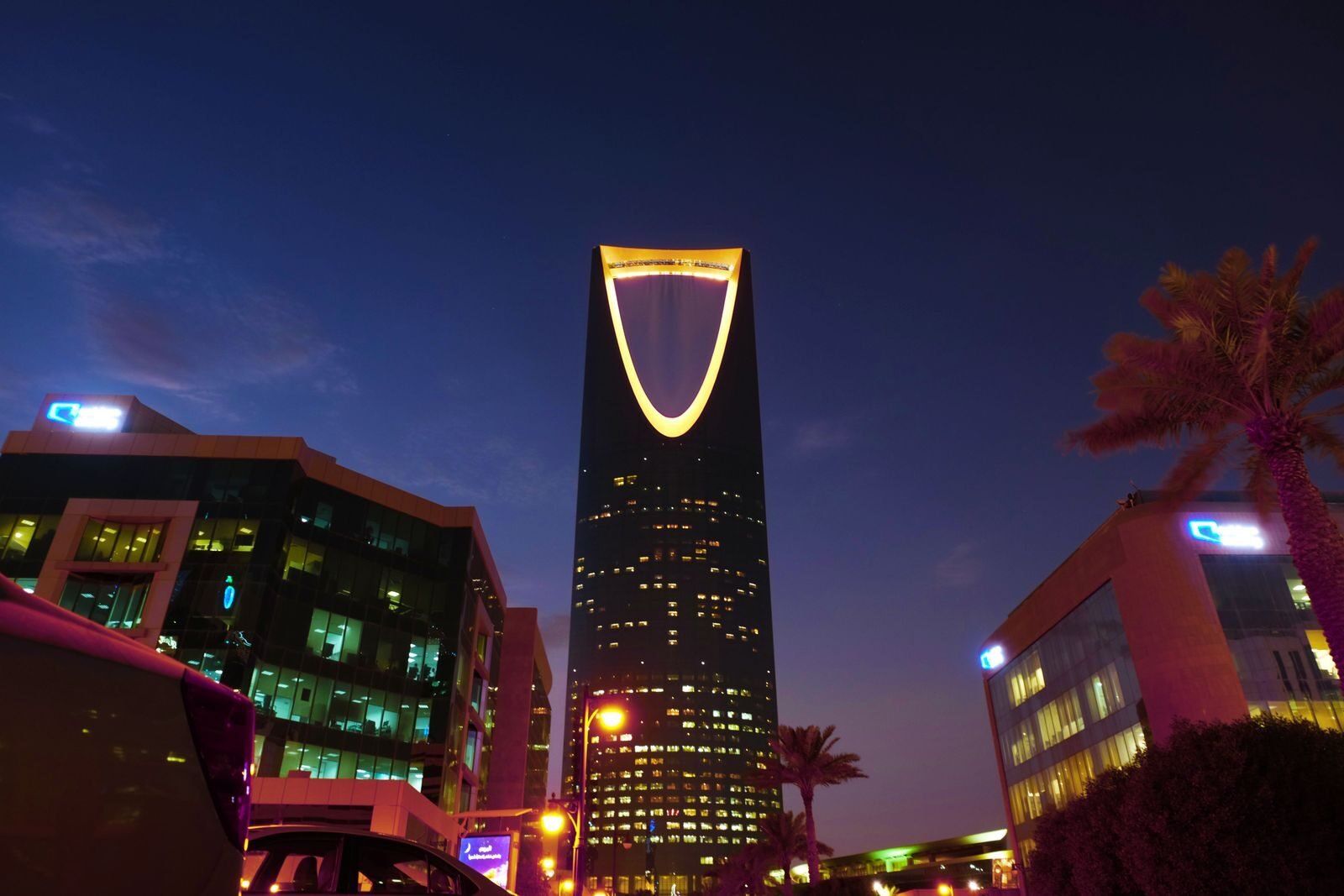
In the late afternoon, head to the Kingdom Centre Tower and ride up to the Sky Bridge, the glass walkway about 300 metres above the city. Go for sunset if you can. The ticket costs from about SAR 69, and the view is the whole point: Riyadh is a flat, spread out city, and from up here you finally see how big it is and how the desert sits right at its edge. The tower itself is easy to recognise, a tall building with a huge inverted arch cut through the top, and it sits on King Fahd Road in the Olaya district, right above a shopping mall.
Finish the day at Boulevard Riyadh City, the centrepiece of Riyadh Season. Entry is free during the festival season, and inside you will find restaurants, fountains, shows and crowds of families out late. Riyadh eats late and stays out late, so do not plan an early night. If you are visiting outside the October to March season, the Boulevard is quieter, and a walk along Tahlia Street in Olaya, with its cafes and restaurants, is a good substitute.
Day 2: Diriyah, the First Capital, and the New Skyline
Diriyah sits about 15 to 20 kilometres northwest of central Riyadh, a 15 to 25 minute drive, and on this Riyadh 3 day itinerary it is the single most important half day trip in the city. The At-Turaif district was the capital of the first Saudi state, founded in 1727, and its mud brick palaces and narrow lanes have been a UNESCO World Heritage Site since 2010. Start at the At-Turaif Welcome Centre for a free map, then walk through Salwa Palace, the royal complex of the first imams, and the small themed museums inside the district: the Museum of the First Saudi State, the Arabian Horse Museum, the Museum of Traditional Architecture and the Military Museum. Wear flat shoes, because the cobbles are uneven and there is very little shade.
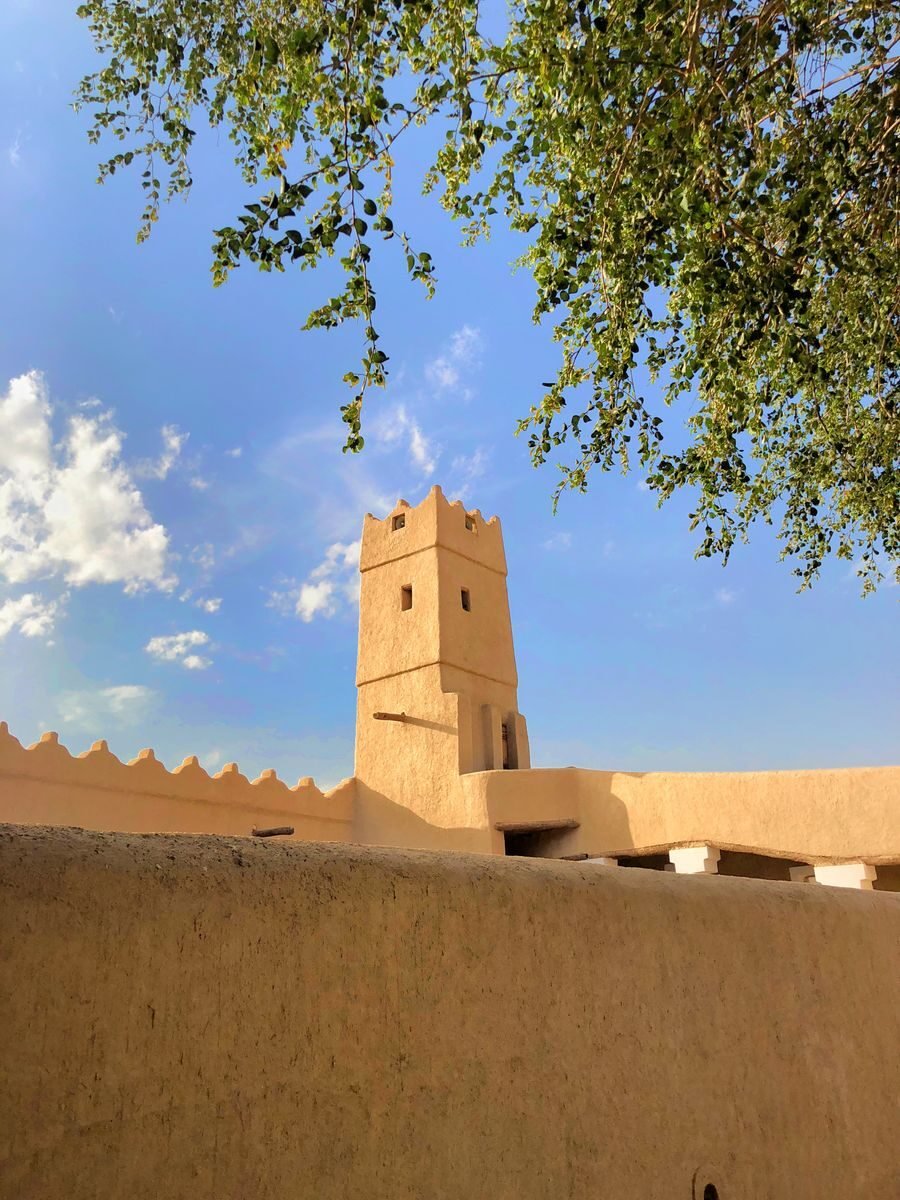
Entry to At-Turaif needs a Diriyah Access Pass, booked in advance on diriyah.sa. Daytime access is free, and evening entry costs from about SAR 50, which is often redeemable as credit at a Bujairi Terrace restaurant, so if you plan to eat there anyway, the evening entry is effectively free. A full ticket including museum access costs around SAR 75. Prices change with the season, so check diriyah.sa on the day you book rather than trusting any guide, including this one. At-Turaif is at its best in the late afternoon, when the sun drops and the mud brick walls turn gold, and after dark the district is lit up.
Lunch or dinner at Bujairi Terrace is the natural next step. It is a row of more than 30 restaurants and cafes in Najdi style architecture, looking straight across at At-Turaif, and it ranges from high end dining to casual cafes. Book ahead on Thursday and Friday nights, because the popular tables fill up fast. A meal here costs roughly SAR 100 to 400 per person depending on where you sit.
In the afternoon, go back into the city to the King Abdullah Financial District, known as KAFD. It is the opposite of Diriyah: glass towers, sharp angles and a metro station designed by Zaha Hadid that is worth seeing even if you do not ride the train. Walk around, stop for coffee at one of the specialty cafes, and look up. KAFD is also a useful metro interchange, so it is an easy stop on the way to your evening plans.
If you still have energy, spend the evening at Boulevard World, the second Riyadh Season zone, with themed country pavilions, rides and food from around the world. It is a very different atmosphere from Boulevard City, and it is the place to go if you want an evening that feels like a festival rather than a walk.
Day 3: The Edge of the World
The Edge of the World, known locally as Jebel Fihrayn, is a cliff face about 90 to 100 kilometres northwest of Riyadh where the Tuwaiq Escarpment drops around 300 metres into a desert valley. It is the signature day trip from the city, and it is the one sight in this itinerary that needs planning.
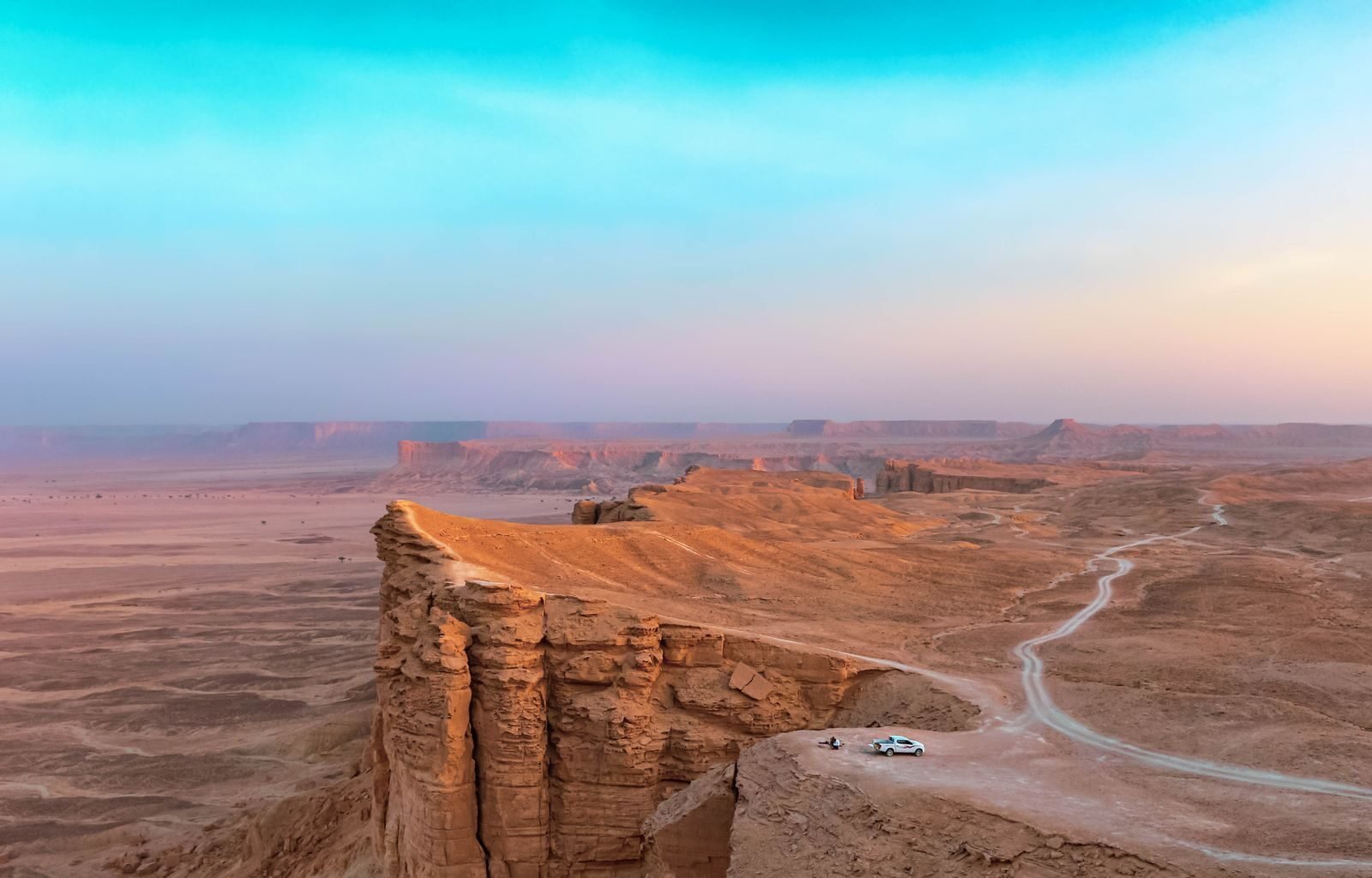
You cannot drive there in a normal car. The last stretch is unpaved desert track, and a 4×4 is required. Most visitors book a guided tour, which costs from about SAR 300 to 500 per person for a shared group trip with transfers, and the main operators are easy to find through your hotel. Leave early in the morning, bring water and sun protection, and wear sturdy shoes, because the walk from the parking area to the cliff edge is about two kilometres uphill. The cliff has no fences, so keep a sensible distance from the edge. The best light is late afternoon, so a sunset tour with a picnic supper on the cliffs is the version to book if you can.
If a full day in the desert sounds like too much, the alternative is the Red Sand Dunes, about 30 minutes west of the city on Makkah Road, where you can ride camels, try dune bashing and watch the sunset without the long drive. It is shorter, cheaper and easier with children, and it still gives you the desert properly.
Back in the city, spend your last evening somewhere unhurried. Wadi Hanifah, the long valley park on the western edge of Riyadh, is free and popular with families at sunset, with walking paths and picnic spots along the water. Or take a slow dinner in Olaya and let the trip settle. Three days in Riyadh moves fast, and the last evening is better spent remembering it than rushing to one more sight. If you want a second opinion on the same three days, this independent Riyadh 3 day itinerary covers Masmak, Diriyah and the Edge of the World in the same order. You will find all our Saudi Arabia guides in the Saudi Arabia Travel section on UAE Look.
Where to Stay in Riyadh
Where you sleep matters more in Riyadh than in most cities, because the sights are spread out and traffic is real. Olaya is the best base for a first visit: it puts you on the metro, next to Kingdom Centre, Tahlia Street restaurants and the malls, and most international hotels are here. The Diplomatic Quarter is quieter and greener, with parks and cafes, and it suits travellers who want calm evenings. KAFD suits business travellers and anyone who wants to be inside the new architecture. Diriyah has its own hotels now, including stays inside the heritage district, which is lovely for a night but not the best base for three days of sightseeing. Book early if you are coming in November or December, because those are the busiest months.
Getting Around Riyadh
The Riyadh Metro is the cheapest way to cross the city. It opened in stages from December 2024, and it now runs six driverless lines with 85 stations over about 176 kilometres, linking the airport, KAFD, Olaya, the National Museum and the outer districts. A standard 2 hour pass costs SAR 4, a 3 day pass costs SAR 20, a 7 day pass costs SAR 40 and a 30 day pass costs SAR 140. The same pass works on Riyadh buses. You can tap a contactless bank card or phone at the gate, or buy a Darb card at a station machine. Trains run from about 6 in the morning to midnight, with a later start on Fridays. A detailed Riyadh Metro tickets and lines guide lists every pass and fare in one place.
For everything the metro does not reach, use Careem or Uber. Both work well in Riyadh, and a ride from central Olaya to Diriyah costs roughly SAR 25 to 50 one way. Taxis are available but agree the fare first or insist on the meter. Do not rent a car for three days unless you are confident driving in heavy city traffic and comfortable navigating in Arabic script on road signs.
| Getting around | What it costs | Best for |
|---|---|---|
| Riyadh Metro, 2 hour pass | SAR 4 | Airport, KAFD, Olaya, National Museum |
| Riyadh Metro, 3 day pass | SAR 20 | A full 3 day stay |
| Riyadh Metro, 7 day pass | SAR 40 | Longer trips |
| Careem or Uber | About SAR 25 to 50 to Diriyah | Diriyah, Edge of the World meeting points, late nights |
| Edge of the World guided tour | About SAR 300 to 500 per person | The desert day trip, 4×4 included |
What Does 3 Days in Riyadh Cost
Riyadh is not a cheap city, but it is not Dubai prices either, and this Riyadh 3 day itinerary keeps costs down because the best sights are free. A mid range traveller should budget roughly SAR 400 to 700 a day, not counting the hotel. The good news is that the best sights are free: Masmak Fortress, the National Museum, Souq Al Zal, Wadi Hanifah and the Edge of the World itself all cost nothing to enter. You pay for the Sky Bridge, the At-Turaif pass, the desert tour and your meals, and those are the numbers in the table below.
| Item | Cost |
|---|---|
| Tourist eVisa (one year, multiple entry) | About SAR 535 |
| Metro 3 day pass | SAR 20 |
| Kingdom Centre Sky Bridge | From about SAR 69 |
| At-Turaif, Diriyah (evening pass) | From about SAR 50 |
| Edge of the World guided tour | About SAR 300 to 500 per person |
| Mid range meal | About SAR 60 to 150 per person |
| Bujairi Terrace dinner | About SAR 100 to 400 per person |
| Mid range daily budget (excluding hotel) | About SAR 400 to 700 per person |
Practical Tips for First-Timers
Dress modestly. Riyadh is more conservative than Jeddah or Dubai. Loose clothing that covers shoulders and knees is the rule for everyone, and women are not required to wear an abaya, but covering up is expected in public places and at heritage sites. The Saudi weekend is Friday and Saturday. Museums open late on Fridays, usually from the afternoon, and shops close briefly at prayer times five times a day, so build your day around that rhythm rather than fighting it.
Alcohol is banned in Saudi Arabia. Do not bring it in and do not buy it from anyone. Photography is fine at most tourist sites, but ask before photographing people, and do not photograph government buildings, military sites or airports. Tipping is not expected in the way it is in the United States, but rounding up a taxi fare and leaving a small tip for good restaurant service is normal.
Check your own government’s travel advice before you book. In 2026 the US State Department has rated Saudi Arabia Level 3, “Reconsider Travel”, because of regional tensions, and the UK Foreign Office notes that missiles and drones have targeted several Saudi cities. The tourist areas themselves operate normally, but advisories change, so read the current wording for your own country before you travel.
One more thing worth knowing: Saudi Arabia only opened to independent tourists in 2019. The metro, the restored old city, the desert tours and the festival zones are all new, and it shows. Expect a city that is still learning how to host visitors, expect some things to be closed or moved without warning, and expect people to be genuinely pleased you came. That is part of the trip. If you are combining Saudi Arabia with the Emirates, our Dubai travel guides cover the other side of the trip, and the UAE Look homepage has all our latest Middle East travel guides in one place.
Is 3 days enough for Riyadh?
Yes. Three days covers the historic centre, the National Museum, Diriyah, Kingdom Centre and the Edge of the World. Add a fourth day if you want Riyadh Season properly or a second desert trip.
When is the best time to visit Riyadh?
October to March. Daytime temperatures are 15 to 25 degrees Celsius, Riyadh Season runs, and the desert is comfortable. Avoid June to August, when temperatures pass 45 degrees.
Do I need a visa for Saudi Arabia?
Most visitors do. Citizens of about 66 countries can apply for a tourist eVisa online at visa.visitsaudi.com for about SAR 535, valid one year with multiple entries. Holders of a valid US, UK or Schengen visa can get a visa on arrival.
How much does a 3 day trip to Riyadh cost?
Budget about SAR 400 to 700 a day per person for a mid range trip, excluding the hotel. The eVisa costs about SAR 535, the Sky Bridge from about SAR 69, and an Edge of the World tour from about SAR 300 to 500.
Is the Riyadh Metro good for tourists?
Yes. Six driverless lines, 85 stations, about 176 kilometres, linking the airport, KAFD, Olaya and the National Museum. A 2 hour pass costs SAR 4 and a 3 day pass costs SAR 20.
How do I get to Diriyah from Riyadh?
By taxi or Careem, about 15 to 25 minutes from central Riyadh, costing roughly SAR 25 to 50 one way. The metro does not reach Diriyah. Book your At-Turaif pass in advance on diriyah.sa.
How much does At-Turaif cost?
Daytime access is free with a pre-booked pass. Evening entry costs from about SAR 50, often redeemable at a Bujairi Terrace restaurant. A full museum ticket costs around SAR 75.
Can I visit the Edge of the World on my own?
Only with a 4×4. The last stretch is unpaved desert track, and a normal car cannot do it. Most visitors book a guided tour for about SAR 300 to 500 per person.
Is Riyadh safe for tourists?
The tourist areas operate normally, but check your own government’s current travel advice before booking, because advisories changed in 2026. Dress modestly and respect local customs.
What should I wear in Riyadh?
Loose clothing covering shoulders and knees. Women are not required to wear an abaya, but covering up is expected in public and at heritage sites.
Is alcohol allowed in Riyadh?
No. Alcohol is banned in Saudi Arabia. Do not bring it in and do not buy it from anyone.
What is Riyadh Season?
Riyadh Season is the city’s annual entertainment festival, usually October to March, with zones like Boulevard City and Boulevard World, concerts, food and shows. The 2026 season opened on 21 October 2026.
#Riyadh #SaudiArabia #RiyadhItinerary #VisitSaudi #Diriyah #TravelGuide
This collection is curated by the UAE Look Team, a group of writers covering fashion, travel, food and living in the UAE and across the Middle East. Our team checks every price, place and detail before publishing, so you get honest, practical guides for Dubai and beyond.