What is the difference between abaya and jilbab? If you are exploring modest fashion, you may have noticed that these two garments look similar but can differ in design, construction, and cultural use. Both are associated with modest dressing, particularly in Muslim communities, yet their exact styles vary across countries, traditions, and individual preferences.
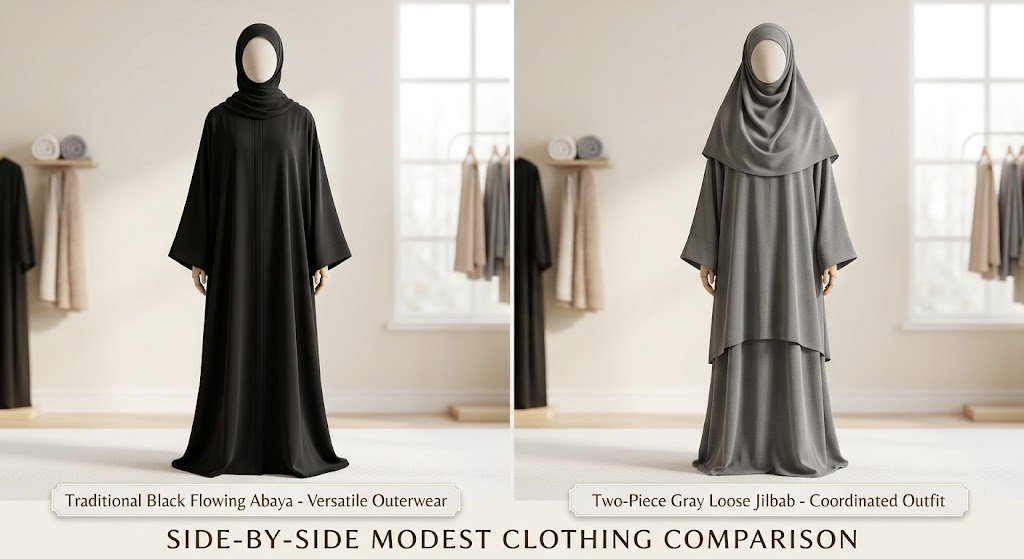
An abaya is generally a loose outer robe worn over everyday clothing, while a jilbab is a modest outer garment designed to provide loose coverage of the body. Depending on the region and interpretation, a jilbab may resemble a long coat, an overgarment, or a flowing one-piece outfit. The terms sometimes overlap, so there is no single design that defines every abaya or jilbab.
Understanding these differences can make shopping easier, especially when you are choosing modest clothing for daily activities, prayer, travel, work, or special occasions. The right option depends on the amount of coverage you prefer, the garment’s fit, its fabric, and how you intend to wear it.
This guide explains the difference between abaya and jilbab in simple terms, compares their common features, and offers practical advice for choosing a suitable style.
What Is the Difference Between Abaya and Jilbab?
The main difference between an abaya and a jilbab is how the terms are used to describe modest outerwear. An abaya is commonly recognized as a long, loose robe, while jilbab is a broader religious and cultural term for an outer garment intended to provide modest coverage.
Although both garments can look very similar, some styles have distinct characteristics.
| Feature | Abaya | Jilbab |
|---|---|---|
| Common design | Long, flowing robe | Loose outer garment or covering |
| Construction | Open-front or closed-front styles | One-piece or layered designs, depending on tradition |
| Fit | Usually loose and flowing | Usually loose, with coverage varying by style |
| Fabric | Crepe, chiffon, nida, cotton blends and other materials | Jersey, woven fabrics, crepe and other suitable materials |
| Common use | Everyday wear, work, gatherings and formal occasions | Daily modest dressing, religious settings and other occasions |
| Styling | Often worn over an outfit | May be worn over regular clothing or as a coordinated outfit |
These are general comparisons rather than strict rules. An abaya can provide extensive coverage, and a jilbab can have a fashionable, tailored appearance without being tight. Neither garment has one universally accepted cut.
What Is an Abaya?
An abaya is a long, loose outer garment traditionally associated with modest dress in the Arabian Peninsula and widely worn in many other regions. Modern abayas are available in simple everyday designs, elegant occasionwear, and contemporary styles with decorative details.
Common Features of an Abaya
Most abayas share several practical features:
- Long length: Many extend to the ankles or near the floor.
- Loose silhouette: The garment is generally designed to drape over the body rather than fit tightly.
- Versatile construction: Some have an open front, while others are closed or pullover styles.
- Variety of fabrics: Options range from lightweight materials to heavier fabrics suitable for cooler weather.
- Different levels of decoration: Designs may be plain, embroidered, embellished, pleated, or minimally tailored.
Black is a familiar traditional color, but abayas are also available in beige, brown, navy, olive, grey, and pastel shades.
Popular Types of Abayas
Open-front abaya: This style resembles a long outer coat and is usually worn over another outfit. Some designs include buttons, snaps, ties, or no fastening at all.
Closed abaya: A closed style covers the front of the body and may be worn as a single garment over suitable underlayers.
Kimono abaya: Inspired by the broad sleeves and relaxed shape of a kimono, this design often has an open front and a flowing silhouette.
Formal abaya: Made for weddings, celebrations, dinners, and other occasions, these designs may feature embroidery, subtle sparkle, lace details, or premium fabrics.
Everyday abaya: Practical styles often prioritize comfort, easy movement, uncomplicated care, and versatility.
When Is an Abaya a Good Choice?
An abaya can be useful when you want an outer layer that is easy to coordinate with clothing you already own. For example, an open-front abaya can be worn over a long dress, a tunic and trousers, or a simple coordinated outfit.
For travel, a lightweight and wrinkle-resistant abaya may be convenient. For formal occasions, a structured or embroidered design can create a more dressed-up appearance without requiring a completely different wardrobe.
What Is a Jilbab?
A jilbab is an outer garment associated with Islamic modest dress. The term is used in religious discussions and in everyday clothing, although its precise meaning and the designs described by it differ between communities.
In some markets, a jilbab is a loose, full-length garment with an integrated head covering. In others, the word refers to a roomy outer layer worn over regular clothes. Certain styles resemble long coats, while others are designed as coordinated or one-piece outfits.
Common Features of a Jilbab
Jilbabs are often designed around the following characteristics:
- Loose coverage: The garment generally avoids a close-fitting silhouette.
- Long length: Many designs cover most of the body down toward the ankles.
- Practical construction: Some feature a simple pullover design or an attached hood or head covering.
- Comfortable movement: The cut may include generous fabric through the body and sleeves.
- Functional details: Depending on the design, features may include cuffs, zippers, pockets, or adjustable fastenings.
Not every jilbab includes an integrated head covering. Similarly, a garment’s label alone does not establish how much coverage it provides; the actual cut and construction matter.
Popular Types of Jilbab
One-piece jilbab: This design combines the main garment and, in some versions, a head covering into one coordinated piece.
Two-piece jilbab: Often sold as a matching top and skirt or another coordinated combination, this style offers flexibility when dressing.
Jilbab with an attached hood: The attached covering can simplify dressing and reduce the need to coordinate separate pieces.
Coat-style jilbab: This design resembles a long, loose coat and may be suitable for outdoor wear, depending on the fabric and climate.
Sport or active jilbab: Lightweight, breathable stretch fabrics can make certain designs practical for walking, commuting, and other everyday activities.
When Is a Jilbab a Good Choice?
A jilbab may suit someone who prefers a coordinated modest outfit or wants a garment designed specifically for extensive body coverage. A one-piece style can simplify getting dressed, while a two-piece version may offer greater flexibility.
For example, someone travelling between home, work, and community activities might prefer a jilbab with a comfortable fit, secure head covering, and fabric that does not restrict movement.
The best choice still depends on the garment’s actual features, personal preferences, and the requirements of the setting in which it will be worn.
Abaya vs Jilbab: Which One Offers More Coverage?
One of the most common questions about the difference between abaya and jilbab is whether one offers more coverage than the other.
The answer depends on the specific garment. A traditional, loose-fitting abaya can provide extensive coverage, while some jilbabs are designed with additional features such as an attached head covering or a one-piece construction.
Neither name automatically guarantees a particular level of coverage.
Body Coverage
Both garments are commonly designed to cover the body with a loose silhouette. However, sleeve width, front openings, fabric opacity, garment length, and the amount of fabric around the torso can vary considerably.
When shopping, check whether the garment remains loose when walking, sitting, and raising your arms. Also consider whether the fabric becomes transparent in bright sunlight.
Head Covering
An abaya does not usually include a head covering as an integrated part of its design. A separate hijab is commonly worn with it.
Some jilbabs include an attached hood or head covering, while others require a separate hijab. If head coverage is important to you, review the product photographs and description rather than assuming it is included.
Layering and Construction
An open-front abaya is designed to layer easily over other clothing. Many jilbabs, especially one-piece versions, are designed to create a complete outfit with fewer separate components.
A two-piece jilbab may provide similar flexibility to an abaya, so the distinction is not absolute.
What Is the Difference Between Abaya and Jilbab in Fabric and Style?
Fabric can affect how a modest garment looks, feels, and performs throughout the day. The best choice depends on your climate, preferred silhouette, and intended use.
Best Fabrics for Abayas
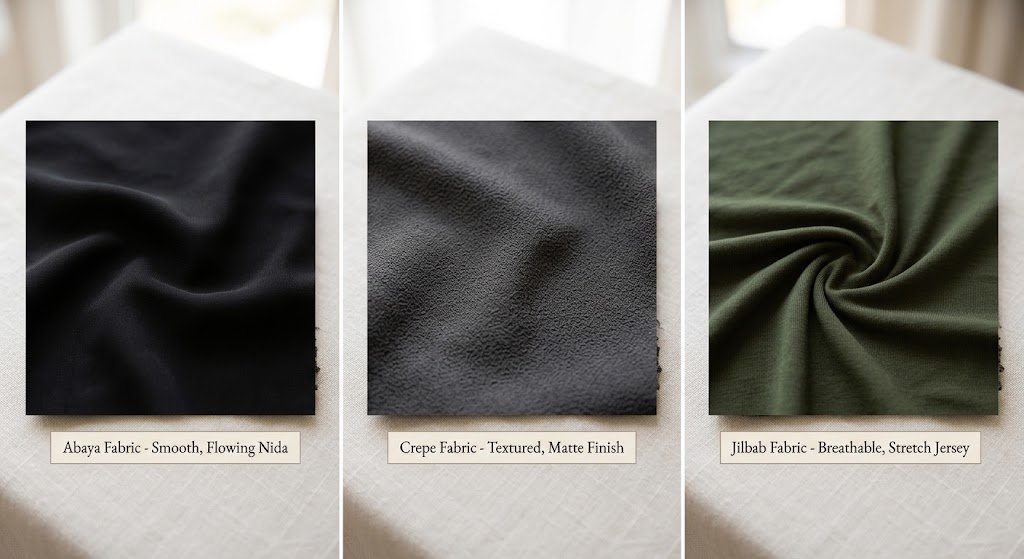
- Nida: Commonly used for smooth, flowing abayas and often chosen for its soft drape.
- Crepe: Offers a textured finish and is available in different weights.
- Cotton blends: Can be useful for casual wear, depending on the blend and weave.
- Chiffon: Lightweight and airy, but often requires appropriate layering because it can be sheer.
- Linen blends: May suit warm-weather outfits, although they can wrinkle more readily.
Best Fabrics for Jilbabs
- Jersey: Flexible and comfortable for many everyday designs.
- Lightweight woven fabrics: Can provide a flowing silhouette without excessive bulk.
- Polyester blends: Often used for durability and easier care, depending on construction.
- Crepe: Can provide a modest, elegant drape for both casual and formal styles.
A useful shopping tip is to check the fabric composition, care instructions, and opacity. Two garments made from the same named fabric may behave differently because of their weave, thickness, lining, and finish.
How to Choose Between an Abaya and a Jilbab
Choosing between these garments does not have to be complicated. Start with how you plan to wear the outfit, then compare its coverage, comfort, and practical features.
Choose an Abaya If You Want Versatile Outerwear
An abaya may be the better option if you:
- Want to layer modest outerwear over different outfits.
- Prefer a classic robe or coat-like silhouette.
- Need separate clothing for different occasions.
- Enjoy changing accessories, colors, or underlayers.
- Want options ranging from simple daily wear to formal designs.
For instance, a neutral open-front abaya can be paired with several dresses or coordinated sets. This can make it a versatile addition to a modest wardrobe.
Choose a Jilbab If You Prefer a Coordinated Outfit
A jilbab may be a better fit if you:
- Prefer a loose, full-length garment designed for modest coverage.
- Want a one-piece or coordinated two-piece outfit.
- Like the convenience of an attached head covering, when available.
- Need a practical outfit for regular daily activities.
- Prefer fewer separate pieces when getting dressed.
However, always confirm whether the jilbab includes a head covering and whether its construction meets your needs.
A Simple Real-World Shopping Example
Imagine you are packing for a week-long trip to Dubai. You want comfortable clothing for sightseeing, visiting family, and attending a dinner.
You could choose one lightweight, open-front abaya that works over several outfits and one formal abaya for the dinner. Alternatively, you could pack a one-piece jilbab for days when you prefer a coordinated outfit with fewer separate components.
The better choice depends on your itinerary, local conditions, preferred coverage, and luggage space—not simply on which garment is considered more traditional.
This is a practical way to compare the garments: list your intended activities first, then select the construction and fabric that suit them.
Are Abayas and Jilbabs the Same in Every Muslim Country?
No. The words abaya and jilbab are not used identically in every country or community.
Abayas are strongly associated with Gulf fashion, particularly in Saudi Arabia and the United Arab Emirates, but the garment is worn in many other places. Jilbab can refer to different types of modest outerwear across regions and clothing markets.
Designs may also reflect local preferences. Some abayas feature understated tailoring, while others include decorative embroidery or contemporary cuts. Jilbabs can range from simple, practical garments to coordinated outfits in a variety of fabrics.
Religious interpretations also influence how people understand the term jilbab. For this reason, a clothing retailer’s product description should not be treated as a universal religious definition.
For background on Islamic dress and the terminology used in religious and cultural contexts, consult these resources:
- Encyclopaedia Britannica background on Islamic culture and history.
- Quran.com Surah Al-Ahzab, verse 59, which discusses outer garments.
- Encyclopaedia of Islam scholarly reference material on Islamic history and terminology; access to some content may require a subscription.
These resources provide context, but they do not establish one universally accepted clothing-store definition for every modern abaya or jilbab.
How Should You Care for an Abaya or Jilbab?
Proper care helps modest garments retain their shape, color, and drape.
- Read the care label: Check whether the garment requires handwashing, a gentle machine cycle, or professional cleaning.
- Use suitable washing methods: Delicate fabrics and embellished designs may need extra care.
- Avoid excessive heat: High temperatures can damage some synthetic fabrics and delicate finishes.
- Hang or fold appropriately: Use a suitable hanger for flowing garments, or fold heavier pieces to prevent stretching.
- Check opacity before wearing: Hold lightweight fabric against a bright light to assess whether additional layering is needed.
These steps are general recommendations. Always follow the manufacturer’s instructions, especially for garments containing embroidery, beads, or mixed fabrics.
Frequently Asked Questions
What is the main difference between abaya and jilbab?
An abaya is generally a long, loose outer robe, while a jilbab is a modest outer garment whose design may range from a loose coat to a one-piece outfit. The terms overlap, and their meanings vary by region and community.
Is a jilbab more modest than an abaya?
Not necessarily. Both can provide extensive coverage. Modesty depends on the garment’s fit, length, opacity, construction, and how it is worn, rather than its name alone.
Can you wear an abaya without a hijab?
Yes, an abaya is generally a separate garment and does not usually include an integrated head covering. Whether a separate hijab is appropriate or required depends on personal practice, religious interpretation, and the setting.
Does every jilbab have an attached hijab?
No. Some jilbabs include an attached head covering, while others are designed to be worn with a separate hijab. Check the garment description before purchasing.
Can an abaya and jilbab be worn for everyday activities?
Yes. Both can be suitable for everyday wear, depending on the fabric, fit, weather, and activity. Lightweight designs may suit warm conditions, while heavier fabrics can work better in cooler weather.
Which is better for beginners: an abaya or a jilbab?
An abaya may be a convenient starting point if you want versatile outerwear to layer over clothes you already own. A jilbab may be more convenient if you prefer a coordinated or one-piece outfit. Choose whichever fits your coverage preferences and daily routine.
Conclusion: Which Should You Choose?
The difference between abaya and jilbab comes down to their common designs, construction, and how the terms are used—not a strict rule that one garment is always more modest than the other.
An abaya is often a versatile outer robe that can be styled for casual wear or special occasions. A jilbab is commonly associated with loose outer coverage and may be available as a one-piece, two-piece, or coat-style garment.
Before buying either, check the fabric, fit, length, opacity, and whether a head covering is included. These practical details will help you choose modest clothing that suits your lifestyle.
Explore different designs, compare product descriptions, and select the garment that makes you feel comfortable and confident.