Choosing the right tailor can make a significant difference in how your clothes fit, feel, and look. If you are wondering, what is the best tailor in Dubai?, the answer depends on the garment you need, your budget, preferred style, and the level of customization you expect. Dubai offers everything from traditional neighborhood tailoring shops to luxury bespoke ateliers specializing in suits, formalwear, and made-to-measure clothing.
The best tailor for one person may not be the right choice for another. Someone preparing for a wedding may need detailed fittings and premium fabric, while a visitor who needs trousers shortened may prioritize affordability and speed. Similarly, customers looking for a traditional kandura or a custom dress need a tailor with experience in that specific garment.
In general, the best tailor in Dubai is one that specializes in your desired clothing, takes accurate measurements, explains its pricing clearly, and offers a reliable fitting and alteration process. Rather than choosing a shop based on advertising alone, compare its craftsmanship, customer feedback, location, and delivery timeline.
This guide explains how to find the right tailor, which Dubai tailoring districts to consider, what services to expect, and which questions to ask before placing an order.
What Is the Best Tailor in Dubai for Your Needs?
There is no single tailor that is automatically best for every customer. Start by identifying what you want made or repaired, then shortlist businesses that regularly handle similar garments.
Best for bespoke suits and formalwear
If you need a business suit, tuxedo, or wedding outfit, look for a specialist in bespoke or made-to-measure tailoring. These services typically offer choices in fabric, lining, buttons, lapels, and garment shape.
Dubai’s established tailoring scene includes House of Parmar, Knights & Lords, Collars & Cuffs, and Stallion Bespoke. Each is worth researching if you want custom menswear. Their locations, processes, prices, and turnaround times can differ, so contact them directly before deciding.
Best for traditional clothing
For kanduras, abayas, and other traditional garments, prioritize a tailor who understands the correct cut, fabric, length, and finishing details for the clothing you want.
Ask to see examples of previous work. A tailor who produces excellent business suits may not necessarily have the same expertise in traditional garments.
Best for everyday alterations
For straightforward jobs such as shortening trousers, adjusting a waist, replacing a zipper, or repairing a seam, a neighborhood alteration shop may be the most practical option.
You generally do not need a luxury atelier for a simple repair. Instead, look for accurate work, clear pricing, convenient access, and a realistic completion time.
Best for custom dresses and occasionwear
If you need an evening dress, formal gown, or an outfit based on your own design, ask whether the tailor offers pattern development, fabric consultation, and multiple fittings.
Bring photographs or a garment you like as a reference. Discuss which details can be reproduced, what modifications may be necessary, and whether embellishments are included in the quoted price.
Which Dubai Areas Are Best for Finding a Tailor?
Dubai has different tailoring options across traditional shopping districts and modern commercial neighborhoods. The most suitable area depends on whether you want affordable alterations, fabric shopping, or a premium bespoke experience.
Bur Dubai and Meena Bazaar
Bur Dubai, particularly the Meena Bazaar area, is worth exploring if you want to compare fabric shops and tailoring services in one trip.
The district is associated with traditional textile retail and made-to-order clothing. Shops may offer suits, shirts, occasionwear, and alterations, although their individual specialties vary.
Why consider this area?
- Convenient access to fabric stores and tailoring shops.
- Opportunities to compare several providers.
- Options for custom clothing and everyday tailoring.
- A practical starting point for customers working within a budget.
Ask whether the price includes fabric, stitching, and alterations. If you supply your own fabric, confirm any additional charges before work begins.
DIFC and Downtown Dubai
DIFC and Downtown Dubai are useful areas to research if you want a premium tailoring experience, professional menswear, or a luxury shopping environment.
Established names such as House of Parmar and Collars & Cuffs are associated with bespoke menswear in DIFC, while other custom-suiting businesses operate in different parts of the city.
These options may suit professionals, wedding parties, and customers seeking more extensive fabric and construction choices.
However, a higher-end location does not automatically guarantee a better fit. Evaluate the actual garment, the fitting process, and the tailor’s willingness to make necessary corrections.
Jumeirah and other residential areas
Residential neighborhoods can be convenient for repeat alterations, custom casualwear, and appointments closer to home.
Some businesses offer home or office measurement visits, but availability varies. Confirm the service area, appointment fee, and whether a second visit will be necessary for fitting adjustments.
How Do You Choose the Best Tailor in Dubai?
A polished storefront and attractive photographs are not enough to judge tailoring quality. Use the following criteria to compare your options.
Check experience with your specific garment
Ask how frequently the tailor makes the type of clothing you need. Suit construction, dressmaking, kandura tailoring, and basic alterations require different skills.
Review previous examples, especially garments similar in style and fabric to your order. If possible, inspect the seams, hems, lining, buttonholes, and overall symmetry.
Understand bespoke versus made-to-measure
These terms are sometimes used loosely in advertising, so ask the tailor to explain the actual process.
- Bespoke tailoring: Traditionally involves developing an individual pattern for the customer, with construction and fittings tailored to the person’s measurements and preferences.
- Made-to-measure: Usually adapts an existing pattern to the customer’s measurements and selected options.
- Alterations: Modify an existing garment to improve its fit or repair damage.
- Ready-to-wear: Clothing is produced in standard sizes and may require adjustments.
The label alone does not tell you how much handwork a garment receives. Ask who cuts the pattern, how the garment is constructed, and how many fittings are included.
Compare fabric and stitching quality
Fabric influences comfort, drape, durability, and appearance. For Dubai’s warm weather, breathable cotton and linen may be suitable for casual garments, while lightweight wool can be a good option for many tailored suits.
The best choice depends on the garment, the season, indoor air-conditioning, and your personal preferences.
Request fabric composition, care instructions, and details about lining and construction. If you are choosing an expensive fabric, ask to see a sample before confirming the order.
Read recent customer reviews carefully
Look beyond the overall star rating. Recent reviews that mention fitting accuracy, communication, alterations, and on-time delivery are more useful than vague praise.
Check whether several customers report the same problem. One complaint may reflect an unusual situation, but repeated concerns about missed deadlines or poor adjustments deserve attention.
Confirm the final price and delivery date
Before paying a deposit, request a written quotation that specifies:
- Fabric and stitching charges.
- Any measurement or appointment fees.
- Number of fittings included.
- Cost of additional alterations.
- Deposit, cancellation, and refund conditions.
- Expected completion date.
This simple step helps prevent misunderstandings and makes comparisons between tailors more meaningful.
How Much Does a Tailor Cost in Dubai?
Tailoring prices in Dubai vary according to the garment, fabric, construction method, complexity, and reputation of the business. A simple trouser adjustment and a fully bespoke suit should not be compared as if they were the same service.
The following figures are illustrative budgeting ranges, not verified current quotations. Obtain a direct quote before placing an order.
| Tailoring service | Illustrative price range |
|---|---|
| Basic trouser or sleeve alteration | AED 20–100 |
| Simple shirt or garment adjustment | AED 30–150 |
| Custom shirt | AED 100–400 |
| Made-to-order kandura | AED 100–500+ |
| Custom dress or occasionwear | AED 200–1,500+ |
| Custom or bespoke suit | AED 1,500–8,000+ |
Prices can fall outside these ranges, particularly for intricate embroidery, premium imported fabrics, hand-finished suits, or designer-level construction.
What affects tailoring prices?
Fabric selection: Imported wool, premium cotton, silk, and specialty textiles can cost considerably more than standard materials.
Construction quality: Hand-finishing, canvas construction, intricate patterns, and detailed lining may increase labor costs.
Design complexity: A straightforward shirt takes less work than a structured jacket or heavily embellished formal dress.
Delivery speed: Urgent orders may carry an additional charge, and not every garment can be completed well within a short deadline.
Number of fittings: More complex garments may require additional appointments to achieve the intended result.
How can you get good value?
Ask for two quotations: one for your preferred specification and another for a simpler alternative. For example, compare a premium wool suit with a standard wool-blend option while keeping the cut and basic design similar.
This helps you understand whether the price difference comes from fabric, construction, or additional services rather than assuming that the cheapest option offers the best value.
What Is the Tailoring Process, and How Long Does It Take?
Understanding the process helps you plan an order, especially if you are visiting Dubai for a wedding, business meeting, or special occasion.
Consultation and design
Explain what you need, when you need it, and how you want the finished garment to look. Bring reference photographs or an existing garment if helpful.
Discuss the fit, fabric, pockets, buttons, lining, color, and other details before approving the design.
Measurements
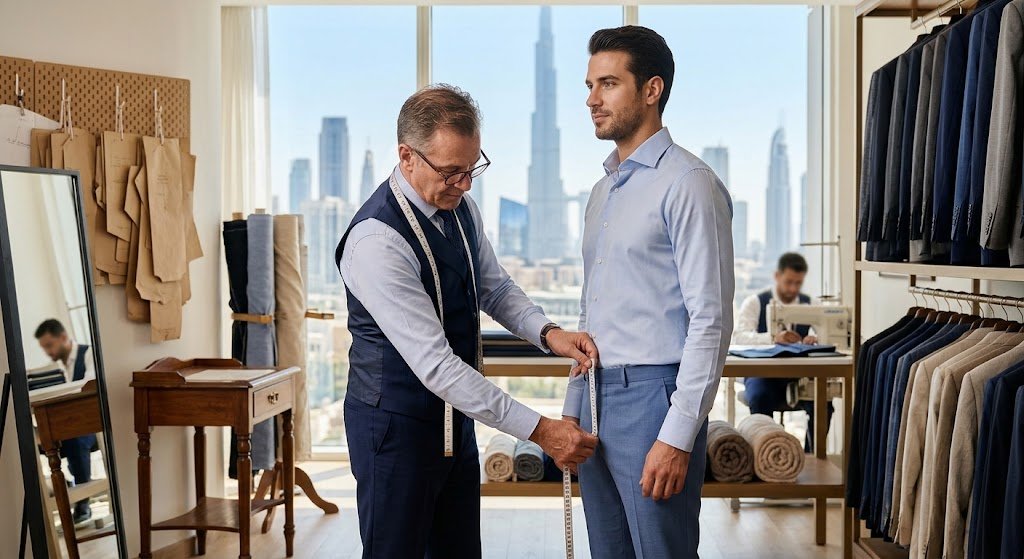
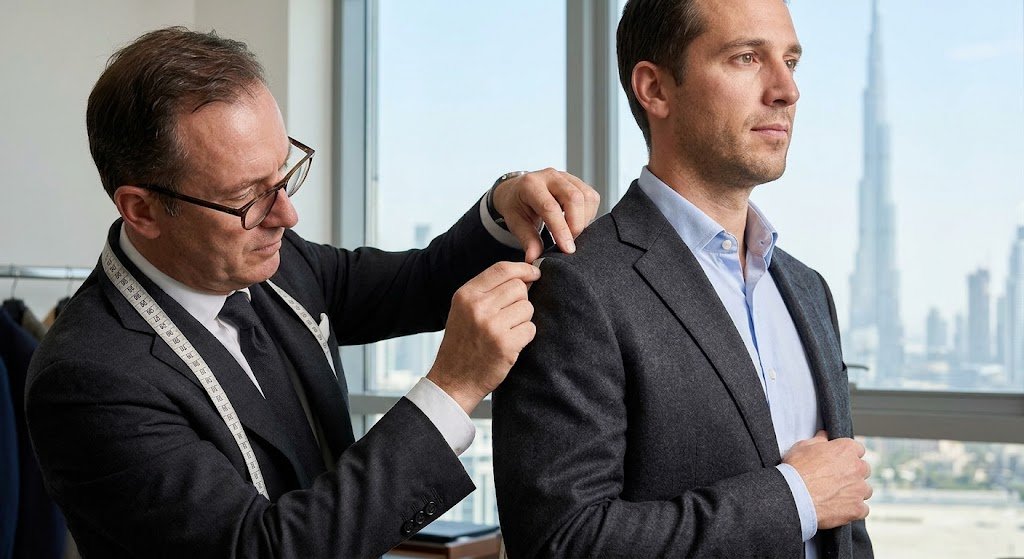
The tailor takes the measurements needed for your garment. For a suit, this may include chest, shoulders, sleeve length, waist, seat, trouser length, and other measurements relevant to the desired cut.
Wear suitable clothing and follow the tailor’s instructions. Mention any fit preferences, such as extra room across the shoulders or a shorter trouser break.
Cutting and initial construction
Depending on the service, the tailor may adapt an existing pattern or prepare an individual pattern before cutting the fabric.
For expensive bespoke garments, ask whether an initial fitting in trial fabric is included. This can help identify fit issues before the final garment is completed.
Fittings and adjustments
During a fitting, assess comfort and movement rather than judging the garment only while standing still.
For a suit, sit down, raise your arms, button the jacket, and walk a few steps. For trousers, check the waistband, pockets, and hem. For a dress, check the fit while standing and sitting.
Final inspection and collection
Before accepting the garment, check the seams, buttons, zippers, hems, lining, and overall fit. Confirm that the final result matches the agreed design.
How long should you allow?
The timeline depends on complexity and the tailor’s workload. Basic alterations may take a day or several days, while custom garments can require multiple visits over several weeks.
For planning purposes, a custom suit may take approximately two to six weeks, though some shops offer faster services and others need longer. Current lead times should always be confirmed directly.
Practical planning example: If you need a suit for a wedding on December 15, aim to begin consultations by early November or sooner. That leaves room for fabric selection, construction, fittings, and unexpected adjustments. This is a planning example, not a guaranteed production schedule.
What Questions Should You Ask Before Hiring a Tailor?
A short consultation can reveal whether a tailor is suitable for your needs. Ask these questions before agreeing to an order.
- Do you specialize in this type of garment? Request examples of similar completed work.
- What is included in the quoted price? Confirm fabric, stitching, fittings, and alterations.
- How many fittings are included? Find out whether additional appointments cost extra.
- Who handles the cutting and construction? Understand how the garment is actually produced.
- When will the garment be ready? Request a realistic date rather than relying on a verbal estimate.
- What happens if the fit is incorrect? Clarify the policy for corrections and additional work.
- Can I see fabric samples first? This is particularly important for expensive or unusual materials.
- Do you offer home appointments? Confirm availability and fees if convenience matters.
- What is your deposit and cancellation policy? Understand your financial commitment before paying.
- How should I care for the finished garment? Ask about washing, pressing, storage, and maintenance.
A professional tailor should be willing to explain the process and set reasonable expectations. Be cautious if the business avoids written quotations, promises an unusually fast turnaround without examining the design, or refuses to clarify its alteration policy.
How Can You Find a Reliable Tailor as a Visitor to Dubai?
If you live in the United States and are planning a trip to Dubai, convenience and timing may matter as much as craftsmanship.
Start by identifying the type of garment and the date you need it. Then shortlist two or three tailors in a convenient area. Contact them before visiting and ask about appointments, estimated costs, and production timelines.
Use these resources to research clothing care and understand what quality tailoring should involve:
- Consumer advice from the U.S. Federal Trade Commission general guidance on shopping decisions and consumer protection.
- Dubai Department of Economy and Tourism official destination information to help plan your visit.
- Federal Trade Commission: Clothing and textiles information about textile and apparel-related consumer requirements.
These resources are useful for general research; they do not certify individual tailors or guarantee workmanship.
A simple comparison method
Create a shortlist and score each tailor from one to five across the following criteria:
| Criteria | Suggested weight |
|---|---|
| Experience with your garment | 30% |
| Fit and finishing quality | 25% |
| Price transparency | 20% |
| Reviews and communication | 15% |
| Location and convenience | 10% |
Multiply each rating by its weight and add the results. This gives you a practical comparison score out of five.
For example, a tailor with a score of 4.5 for garment expertise receives 1.35 weighted points because \(4.5 \times 0.30 = 1.35\). Repeat the calculation for each criterion.
This is an original decision-making framework, not an independently verified ranking of Dubai tailors. Its purpose is to help you choose according to your own priorities rather than relying entirely on advertising or online popularity.
Conclusion: Which Is the Best Tailor in Dubai?
The best tailor in Dubai is the one that delivers the right combination of craftsmanship, fit, service, and value for your specific needs. For bespoke suits, research established specialists such as House of Parmar, Knights & Lords, Collars & Cuffs, and Stallion Bespoke. For traditional garments, dresses, or everyday alterations, look for a tailor with demonstrated experience in that category.
Before choosing, compare recent reviews, request a clear quotation, confirm the fitting process, and establish a realistic delivery date. If you are ordering an outfit for an important event, leave enough time for adjustments rather than relying on a last-minute appointment.
Ultimately, a good tailor should understand your preferences, communicate clearly, and produce clothing that fits comfortably and matches your expectations.
Ready to find your ideal tailor? Shortlist two or three local options, ask the right questions, and arrange a consultation before committing to your order.
FAQ Section
What is the best tailor in Dubai?
The best tailor depends on your requirements. House of Parmar, Knights & Lords, Collars & Cuffs, and Stallion Bespoke are options to research for custom menswear. Compare their current services, prices, reviews, and fitting processes before choosing.
How much does a tailor cost in Dubai?
Prices vary by garment and complexity. Simple alterations may cost tens of dirhams, while custom suits and elaborate occasionwear can cost thousands. Request a detailed quotation to confirm the current price.
Where can I find affordable tailors in Dubai?
Bur Dubai and Meena Bazaar are useful areas to explore for fabric shops, custom clothing, and everyday tailoring. Compare quotations from several businesses and confirm what each price includes.
How long does bespoke tailoring take in Dubai?
A bespoke garment may take several weeks, depending on the design, fabric availability, fittings, and workload. Some alterations are quicker. Confirm the completion date before placing an order.
What is the difference between bespoke and made-to-measure tailoring?
Bespoke tailoring traditionally involves creating an individual pattern for the customer. Made-to-measure generally adapts an existing pattern to personal measurements. Ask the tailor about the actual construction process rather than relying on the label alone.
Should I book a tailor before visiting Dubai?
Booking in advance is advisable if you need a custom suit, wedding outfit, or other complex garment. It gives you more time for consultation and fittings. For basic alterations, a walk-in appointment may be sufficient, depending on availability