
This collection is curated by the UAE Look Team, a group of writers covering fashion, travel, food and living in the UAE and across the Middle East. Our team checks every price, place and detail before publishing, so you get honest, practical guides for Dubai and beyond.
Dubai looks easy. It is clean, safe, English is everywhere, and the Metro is driverless. That is exactly why first timers get caught out. The mistakes first-time visitors make in Dubai are rarely dramatic. They are small, practical errors that cost real money, waste entire afternoons, or turn a good day into a miserable one. A taxi habit that costs AED 200 extra a day. A Friday plan built around a weekend that no longer exists. A desert safari booked for midday in August.
This guide lists the ten mistakes first-time visitors make in Dubai most often, explains what each one actually costs you, and gives you the fix. Read it before you land and you will travel like someone who has been here before.
1. Treating Friday Like the Weekend
This is the most common of all the mistakes first-time visitors make in Dubai, and it comes from old guidebooks.
What goes wrong: visitors plan their big sightseeing day for Friday, assuming offices are closed and the city is quiet, or they arrive on a Friday expecting a sleepy weekend atmosphere and find traffic, queues and normal working hours instead. The reverse mistake is just as common. People avoid Saturday, thinking it is a working day, when Saturday is actually one of the two weekend days and the malls, beaches and attractions are at their busiest.
The fix: plan your week around Saturday and Sunday as the weekend. Expect Friday to behave like a normal day, except that many government offices close around noon and some restaurants and attractions run different hours around prayer time. If you want the quietest sightseeing, aim for a weekday morning. If you want the buzz, Saturday evening is when the city is out in force.
2. Taking Taxis Everywhere Instead of the Metro
Dubai taxis are comfortable, metered and everywhere. They are also the fastest way to burn through a holiday budget. One of the mistakes first-time visitors make in Dubai is treating taxis as the default instead of the exception.
The numbers tell the story. A standard Dubai taxi starts at AED 5 for a street hail (AED 5.50 at night, 10pm to 6am), with a minimum fare of AED 12, and around AED 2 per kilometre after that. A taxi from Dubai Airport (DXB) to Downtown starts at AED 20. App bookings through Careem or similar start higher, at AED 9 to AED 13 depending on the time. A day of four or five taxi rides easily reaches AED 150 to AED 250.
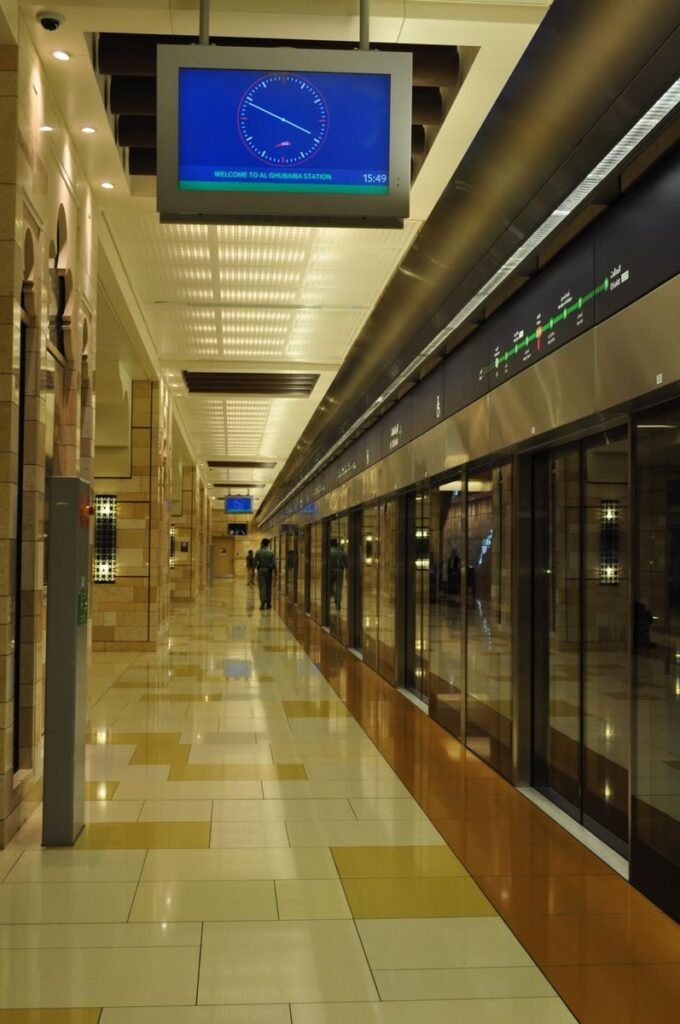
The Metro costs almost nothing by comparison. On a Silver Nol card, a trip costs AED 3 within one zone, AED 5 across two zones and AED 7.50 for three or more zones. A Silver Nol card costs AED 25, including about AED 19 of travel credit. The Red Line runs from the airport through Downtown, Business Bay, Dubai Marina and Jebel Ali, and the Green Line covers Deira and the old city. Trains run from 5am to midnight most days, until 1am on Friday, and from 8am on Sunday.
The fix: buy a Silver Nol card at the airport Metro station on arrival and use the Metro for every trip along the Red and Green lines. Save taxis for the last stretch, for places the Metro does not reach, or for late nights after the Metro closes. For a full guide to routes, fares and Nol cards, see our guide on how to get around Dubai.
| Transport option | Typical cost | Best for |
|---|---|---|
| Metro, Silver Nol | AED 3 to 7.50 per trip | Airport, Downtown, Marina, Deira |
| Street taxi | AED 5 flag fall, AED 12 minimum | Short hops, late nights, off Metro areas |
| App-booked taxi | AED 9 to 13 starting fare | When no taxi is passing |
| Airport taxi | AED 20 starting fare | DXB to hotel on arrival |
3. Underestimating the Heat
Dubai heat is not like heat anywhere else, and underestimating it is one of the mistakes first-time visitors make in Dubai that can genuinely ruin a trip. In July and August, daytime highs average 41 to 42C, with spikes above 45C, and overnight lows stay around 30 to 31C. Humidity on the coast often runs above 60 percent, so the “feels like” temperature is higher than the thermometer reading. There is almost no rain from June to September, and the sun is intense from mid morning onwards.
Visitors make three versions of this mistake. They walk between attractions at midday. They forget water because the air conditioning everywhere makes them feel cool indoors. And they skip sunscreen because they are only going out “for ten minutes”.
The fix: plan outdoor time for before 10am or after 5pm, and spend the middle of the day indoors in malls, museums and aquariums. Drink water constantly, even when you do not feel thirsty, and carry a bottle with you. Wear sunscreen, a hat and light, loose clothing. If you feel dizzy, nauseous or unusually tired, get into shade and air conditioning immediately and drink water. Heat exhaustion is real here, and it creeps up on people who think they can handle heat.
For the full month by month picture, see our guide on the best time to visit Dubai.
4. Dressing for the Beach Everywhere
Dubai is relaxed by regional standards, but it is still a Muslim country with a real dress code, and dressing wrong is one of the mistakes first-time visitors make in Dubai that draws attention for the wrong reasons. Beachwear belongs at the beach and the pool. It does not belong in a mall, a mosque, a restaurant or a government building.
The practical rule is simple. In malls, souks and public places, cover your shoulders and knees. Swimwear is fine at hotel pools and beaches, but put a cover up on before you walk through the hotel lobby or into a cafe. At mosques, including the Jumeirah Mosque tour, women need to cover their hair and wear loose clothing that covers arms and legs, and men need long trousers and covered shoulders. Many mosques lend abayas and scarves at the entrance, but arriving prepared is better.
The fix: pack one light scarf or shawl and one pair of long, loose trousers, even in summer. They weigh nothing and they solve every dress code situation you will meet. You will be more comfortable, you will get better service, and you will not be the tourist everyone is staring at in the mall.
5. Drinking Alcohol in the Wrong Place
Alcohol is legal in Dubai for non-Muslim adults aged 21 and over, but only in licensed places. This is one of the mistakes first-time visitors make in Dubai that can have serious consequences, because the rules are very different from Europe or North America.
The rules in plain terms: you can drink in licensed hotel bars, restaurants, clubs and beach clubs. You do not need a personal licence to order a drink in a licensed venue. You cannot drink in public places, on the street, on the beach outside a licensed area, or in your car. The legal blood alcohol limit for driving is zero. There is no “one drink is fine” in Dubai. Do not drive after drinking anything at all.
Buying alcohol to take away is different. To buy from a licensed shop such as MMI or African and Eastern, tourists need a free temporary permit, issued in store on presentation of a passport, valid for about 30 days. The personal licence fee was removed in January 2023, so the permit is free, but you still need it for retail purchases. Check the current requirements on the retailers’ own pages before you travel, because this process has changed more than once.
The fix: drink only in licensed venues, never carry an open drink in public, and never drive after drinking. If you want a bottle for your hotel room, get the free tourist permit at the shop. For official rules, check the UAE government portal at u.ae.
6. Booking Nothing in Advance
Dubai rewards planners and punishes spontaneity at its most popular attractions. One of the mistakes first-time visitors make in Dubai is assuming you can just turn up at the Burj Khalifa, the Museum of the Future or a desert safari and walk in.
The Burj Khalifa sells timed entry slots, and the popular sunset slots sell out days ahead. Standard adult tickets for Levels 124 and 125 cost AED 189 on the official ticket site, with sunset slots costing more, and the Level 148 experience costs AED 399. Turn up without a booking at sunset and you will either pay the highest price or find nothing available. Desert safaris, dinner cruises and popular restaurants work the same way, especially from Thursday to Saturday and during the Dubai Shopping Festival, which runs from 4 December 2026 to 17 January 2027.
The fix: book the Burj Khalifa, any desert safari and any restaurant you really care about at least a few days ahead, and a week ahead for sunset slots and weekends. Book the first slot of the day or the last slot of the evening for the shortest queues. Keep your booking confirmations on your phone, not just in email, because you will be asked for them at the door.

7. Assuming Everything Is Open All Year
Dubai has a seasonal calendar that surprises first timers. Some of its best loved attractions close completely in summer, and others close for renovation without much warning. Assuming everything is open is one of the mistakes first-time visitors make in Dubai that can wipe out a whole day of plans.
Global Village, the open air festival park, runs only in the cooler months. Season 31 opened on 14 October 2026 and runs until May 2027, with entry at AED 25 on weekdays and AED 30 on any day. It is closed all summer. The Dubai Miracle Garden has a similar season, running from 8 October 2026 to 31 May 2027. Both are closed in June, July and August, and no amount of hoping changes that.
The Museum of the Future is a different case. It closed on 1 September 2026 for a major transformation of its exhibitions and is expected to reopen in the first quarter of 2027, around its fifth anniversary. No exact reopening date has been announced. If you are visiting before that, do not build a day around it. Check the official museum site before you travel.
The fix: check the season and opening status of every outdoor attraction before you plan your days. Indoor attractions, malls, waterparks and aquariums run all year. For free options that work in any season, see our list of free things to do in Dubai.
8. Falling for Street Scams and Fake Deals
Dubai is one of the safest cities in the world for tourists, but it still has scams, and falling for one is among the mistakes first-time visitors make in Dubai that costs the most money for the least return. The common ones are easy to spot once you know them.
The classic is the “free” tour or the too cheap desert safari sold by a tout outside a mall or near a Metro station. The price looks unbeatable, then the extras start: the dune bashing costs extra, the dinner costs extra, the camp is a long drive from anything, and the vehicle is old and unlicensed. Another is the fake gold or perfume deal, where a stranger offers a “wholesale” price on something that turns out to be worthless. A third is the unmetered taxi, where the driver claims the meter is broken and quotes a fixed price that is two or three times the real fare.
The fix: book tours only through licensed operators or your hotel, and check reviews before you pay. Never buy gold, perfume or electronics from a stranger on the street. Only take metered taxis, and if the driver refuses to start the meter, get out and take the next one. If a deal sounds too good to be true in Dubai, it is. For gold specifically, read our guide to the Gold Souk and how to buy gold without overpaying before you shop.
9. Ignoring Ramadan Etiquette
Ramadan changes the rhythm of Dubai completely, and ignoring it is one of the mistakes first-time visitors make in Dubai that offends people unnecessarily. Ramadan 2027 is expected to begin on Monday 8 February 2027, with Eid al-Fitr expected on 9 or 10 March 2027. The exact dates depend on the official moon sighting and are confirmed shortly beforehand.
During Ramadan, many Muslims fast from dawn to sunset. Eating, drinking or smoking in public during fasting hours is disrespectful and can attract fines. Restaurants stay open, but many serve behind screens or offer takeaway during the day, and the real dining happens after sunset at iftar. Mall hours shift later, the Metro runs different hours, and the evenings become the busiest and most festive time of day. Alcohol service is restricted in some venues during the month.
None of this means you should avoid Dubai during Ramadan. It is actually a wonderful time to visit, with night markets, special iftars and a different atmosphere. It just means you should adjust. Eat and drink discreetly indoors during the day, dress a little more conservatively than usual, and plan your sightseeing for the morning and your evenings for the city coming alive after sunset.
The fix: if your trip falls in Ramadan, check restaurant and attraction hours in advance, because many change for the month. Book an iftar at least once. It is one of the best meals you will have in Dubai.
10. Forgetting the Small Stuff
The last of the mistakes first-time visitors make in Dubai is a bundle of small things, and each one on its own is minor. Together they add up to a trip that feels harder than it should.
First, tipping. Tipping is not mandatory in Dubai, but it is appreciated. Restaurants often add a service charge, so check your bill before tipping on top of it. A tip of 10 to 15 percent for good service is generous. Taxi drivers do not expect a tip, but rounding up the fare is common and welcome.
Second, the Sunday Metro. The Metro starts at 8am on Sunday, three hours later than other days. Visitors who plan an early Sunday start and arrive at a closed station lose an hour before they understand what happened.
Third, connectivity. Buy a local SIM or an eSIM at the airport, or arrange one before you fly. You will need data for maps, ride apps and booking confirmations, and hotel WiFi alone is not enough when you are out all day.
Fourth, cash. Dubai is almost entirely card friendly, but keep some small notes and coins for the souks, for small cafes in Deira, and for tips. Some smaller shops still prefer cash.
Fifth, the sun sets early in winter and the evenings get cool. From December to February, pack a light jacket for the evening, especially if you are going on a desert safari or sitting outside at dinner.
Quick Reference: Every Mistake and Its Fix
| Mistake | What it costs you | The fix |
|---|---|---|
| Friday treated as weekend | Wasted planning, wrong crowd expectations | Weekend is Saturday and Sunday since 2022 |
| Taxis everywhere | AED 150 to 250 a day | Silver Nol card, Metro for main routes |
| Underestimating heat | Exhaustion, lost afternoons | Outdoors before 10am or after 5pm, water, sunscreen |
| Beachwear everywhere | Stares, refused entry | Cover shoulders and knees in public places |
| Alcohol in public | Fines, serious trouble | Licensed venues only, zero tolerance driving |
| No advance bookings | Sold out sunset slots, highest prices | Book Burj Khalifa and safaris days ahead |
| Assuming year round opening | Closed attractions, wasted days | Check Global Village and Miracle Garden seasons |
| Street scams | Overpaying, fake goods | Licensed operators only, metered taxis only |
| Ignoring Ramadan | Offence, wrong hours | Discreet daytime eating, book an iftar |
| Small stuff | Lost hours, small frustrations | Tip 10 to 15 percent, Sunday Metro from 8am, local SIM |
The Bottom Line
The mistakes first-time visitors make in Dubai are not about the city being difficult. They are about arriving with assumptions from home and from old guidebooks. Dubai runs on its own calendar, its own transport logic and its own rules, and once you know them, the city is one of the easiest places in the world to visit. Learn the weekend, ride the Metro, respect the heat and the culture, book ahead, and check what is actually open before you go. Do that, and your first trip will feel like your third.
For a day by day plan that puts all of this into practice, see our Dubai in 3 days itinerary and our guide to Dubai trip costs for 2027.
#DubaiTravel #DubaiTips #VisitDubai #DubaiFirstTime #DubaiGuide #Dubai2027
Frequently Asked Questions
What is the biggest mistake first-time visitors make in Dubai?
Taking taxis everywhere. A Silver Nol card and the Metro cost AED 3 to AED 7.50 per trip, while a day of taxi rides easily reaches AED 150 to AED 250. Use the Metro for main routes and save taxis for the last stretch.
What is the weekend in Dubai?
Saturday and Sunday. The UAE moved from a Friday and Saturday weekend to a Saturday and Sunday weekend on 1 January 2022. Friday is a working day, with a half day for the public sector ending around noon.
Can tourists drink alcohol in Dubai?
Yes, if you are a non-Muslim aged 21 or over, in licensed venues such as hotel bars and restaurants. You cannot drink in public, and the blood alcohol limit for driving is zero. To buy alcohol from a shop, tourists need a free temporary permit issued in store with a passport.
How hot does Dubai get in summer?
Daytime highs average 41 to 42C in July and August, with spikes above 45C, and overnight lows around 30 to 31C. Humidity on the coast is often above 60 percent, so it feels hotter than the temperature suggests. Plan outdoor time for early morning or evening.
What time does the Dubai Metro start on Sunday?
At 8am, three hours later than other days. From Monday to Saturday the first train runs at 5am. The Metro closes at midnight most days and at 1am on Friday.
How much does a Dubai taxi cost?
A street hail starts at AED 5 (AED 5.50 at night), with a minimum fare of AED 12. A taxi from Dubai Airport starts at AED 20. App bookings start higher, at AED 9 to AED 13 depending on the time.
Do I need to book the Burj Khalifa in advance?
Yes, especially for sunset slots. Standard adult tickets for Levels 124 and 125 cost AED 189 on the official ticket site, and the popular 4pm to 7pm slots sell out days ahead. Book at least a few days early, and a week ahead for weekends.
Is Dubai safe for first-time visitors?
Yes, Dubai is one of the safest cities in the world for tourists, with very low street crime. The main risks are heat, overpaying for taxis and tours, and breaking local rules by accident, which is why reading up before you arrive matters.
What should I wear in Dubai as a tourist?
Cover your shoulders and knees in malls, souks and public places. Beachwear is for the beach and the pool only. At mosques, women should cover their hair and wear loose clothing, and men should wear long trousers and covered shoulders.
Is Global Village open in summer?
No. Global Village is a seasonal, open air park. Season 31 runs from 14 October 2026 to May 2027 and it is closed all summer. The Dubai Miracle Garden is also seasonal, running from 8 October 2026 to 31 May 2027.
Do I need cash in Dubai?
Not much. Cards are accepted almost everywhere, including taxis and the Metro. Keep some small notes for souks, small cafes and tips, but you can do most of a trip on a card.
When is Ramadan 2027 in Dubai?
Ramadan 2027 is expected to begin on Monday 8 February 2027, with Eid al-Fitr expected on 9 or 10 March 2027. The exact dates are confirmed by the official moon sighting shortly beforehand, so check closer to your trip.
This collection is curated by the UAE Look Team, a group of writers covering fashion, travel, food and living in the UAE and across the Middle East. Our team checks every price, place and detail before publishing, so you get honest, practical guides for Dubai and beyond.