
This collection is curated by the UAE Look Team, a group of writers covering fashion, travel, food and living in the UAE and across the Middle East. Our team checks every price, place and detail before publishing, so you get honest, practical guides for Dubai and beyond.
You can overpay by hundreds of dirhams at the Gold Souk Dubai without ever being cheated on the gold rate. The gold rate is fixed and the same in every shop. The money leaks out in two places most first time buyers never see: the making charge, and the weight you are charged for. Get those two right and the Gold Souk is one of the best places in the world to buy gold. Get them wrong and the “bargain” costs more than a mall jeweller.
This guide explains how gold is priced at the Gold Souk Dubai, what a fair making charge looks like, how to bargain without being rude, and the checks that stop you overpaying. It is written for a first time buyer, and every price in it is either a verified rate from 17 November 2026, clearly dated, or a typical range labelled as such.
Where is the Gold Souk Dubai and how do you get there?

The Gold Souk is in Deira, in the Al Ras neighbourhood on the north bank of Dubai Creek, beside the Spice Souk. It is a covered market of more than 300 independent shops along Sikkat Al Khail Road and Old Baladiya Street. Entry is free, and you can walk in and look at everything without buying anything.
The easiest way to get there is the metro. Take the Green Line to Al Ras station or Gold Souq station. Both are about a five minute walk from the main entrance. If you start on the Red Line, change at Union or BurJuman. The most enjoyable way is the abra, the small wooden water taxi across Dubai Creek from Bur Dubai to Deira Old Souk station. It costs AED 1 per person, paid in cash to the driver, and runs from 6 in the morning to midnight.
Most shops open from 10 in the morning to 10 at night, Saturday to Thursday. On Friday they open at 4 in the afternoon, after prayers, and close at 10. Many shops also take a break in the middle of the day, roughly 1 to 4 in the afternoon. The best time to visit is a weekday evening after 5, when the lanes are cooler, fully lit and at their most atmospheric, and the shops are all open. The Deira Gold Souk guide lists the same hours and metro stops, and our Dubai Travel section covers getting around the city for the rest of your trip.
| Getting there | Details |
|---|---|
| Metro | Green Line to Al Ras or Gold Souq station, about 5 minutes on foot |
| Abra | Bur Dubai to Deira Old Souk station, AED 1 per person, 6am to midnight |
| Taxi | From Downtown Dubai about 20 minutes, roughly AED 35 to 45 |
| Hours | Saturday to Thursday 10am to 10pm, Friday 4pm to 10pm |
| Best time | Weekday evenings after 5pm |
How is gold priced in Dubai?
Every piece of gold jewellery at the Gold Souk Dubai is priced the same way, in three parts. Once you understand the formula, no shop can confuse you.
Final price = (gold weight in grams x the day’s gold rate) + (gold weight x making charge per gram), then add 5 percent VAT on the total.
The first part, the gold rate, is fixed. The Dubai Gold and Jewellery Group publishes the official board rate, and every licensed shop works from it. The rate is set from the London spot price converted into dirhams, and it moves through the day as the world price moves. You cannot bargain the gold rate down, and any shop that offers you a “special rate” below the board rate is either cutting the purity or adding the difference somewhere else.
The second part, the making charge, is where the negotiation lives. It is the fee for turning raw gold into a finished piece, and it is completely negotiable. The third part, VAT, is 5 percent on jewellery, calculated on the gold value plus the making charge.
Here is what the board rate looked like on 17 November 2026, from the Dubai Gold and Jewellery Group rate as published that day. It changes every day, so treat this as a snapshot, not a price you can rely on next week.
| Karat | What it is used for | Rate per gram, 17 November 2026 |
|---|---|---|
| 24K | Bars, coins, investment gold | AED 465.50 |
| 22K | Most jewellery, the standard for buyers | AED 431.00 |
| 21K | Jewellery, popular with many buyers | AED 413.25 |
| 18K | Diamond set and lighter pieces | AED 354.25 |
Check the live rate on your phone before you enter any shop. The rate is displayed on boards all over the souk, and the number on your phone should match the number on the shop board. If it does not, ask why before you discuss any price.
What are making charges and what should you pay?
Making charges are the labour cost of the piece, and they vary far more than the gold rate. A plain chain carries a low charge. An intricate handmade bridal set carries a high one. The table below shows the typical ranges in the Gold Souk Dubai, based on 2026 guides from the market. Use them as a benchmark, not a fixed price.
| Type of piece | Typical making charge per gram |
|---|---|
| Plain 24K coins and simple bars | AED 5 to 15 |
| Simple chains and plain bangles | AED 10 to 25 |
| Standard necklaces and rings | AED 20 to 40 |
| Intricate bridal sets and filigree | AED 40 to 80 or more |
| Designer and branded pieces | AED 60 to 150 or more |
The making charge is quoted per gram, and that is the number to negotiate. Never ask “what is the best price for this necklace”. That invites a small discount on the total bill while the labour fee stays inflated. Ask instead: “What is the making charge per gram in AED on this piece?” That one question moves the whole negotiation onto the figure you can actually compare between shops.
Here is a worked example, using the board rate from 17 November 2026, so you can see how the numbers add up. A 10 gram 22 karat chain, with a making charge of AED 25 per gram: Gold value: 10 grams x AED 431 = AED 4,310. Making charge: 10 grams x AED 25 = AED 250. Subtotal: AED 4,560. VAT at 5 percent: AED 228. Total to pay: AED 4,788.
If the shop quotes you AED 5,500 for that same chain, the extra AED 712 is not the gold rate. It is either a higher making charge or a weight problem, and now you know exactly which question to ask.
How do you bargain at the Gold Souk without being rude?
Bargaining is expected at the Gold Souk. No shopkeeper is offended by a counter offer. It is part of how the market works, and the opening quote is set with a negotiation in mind. The trick is to bargain on the right number, calmly, and to be ready to walk away.
First, know the day’s rate before you enter. Check it on your phone. This is your single most important piece of leverage, because it takes the gold value off the table and leaves only the making charge to discuss.
Second, ask for the price broken into three parts: gold weight times the day’s rate, making charges, and VAT. A reputable shop will do this without hesitation. If a seller will not break the price down, buy elsewhere. There are more than 300 shops in the souk.
Third, compare at least three shops before you commit. The gold rate will be almost identical in all three, so any big gap in the total comes from the making charge or the weight. Making charges for similar designs can differ by AED 200 to 1,500 on the same piece, which is why comparing matters more than haggling hard in one shop.
Fourth, make your counter offer on the making charge. A reasonable opening counter is 30 to 40 percent below the quoted making charge. The shopkeeper will counter, and you will usually meet somewhere in the middle, often 20 to 30 percent below the first quote. Skilled bargainers on plain pieces can get up to 30 to 50 percent off the quoted making charge. Stay friendly through all of it. A smile gets further than a hard stare, and the shopkeeper is more likely to meet you halfway if the conversation stays pleasant.
Fifth, offer cash. Card payments can attract a 1 to 2.5 percent convenience fee at some shops, and cash removes the fee and sometimes earns a better price. Buying a set, a necklace with earrings, or several bangles together, also gives you real leverage. Ask for a bundled making charge rate on the whole set.
Finally, be ready to walk away. The most powerful sentence in the souk is silence followed by your feet. Thank the shopkeeper politely and leave. Sellers frequently call you back with a better price before you reach the next shop, and if they do not, the same design is usually available a few stalls away. For a deeper look at the same tactics, this Dubai Gold Souk bargaining guide breaks the whole process down step by step.
What is the net weight trap?
This is the trick that costs buyers the most, and it has nothing to do with bargaining. When you pick up a necklace with diamonds, coloured stones or enamel, the scale shows the gross weight. That is the gold plus the stones, the enamel, the settings, and sometimes even the lac, the wax backing inside Kundan pieces.
Net weight is the gold alone, and that is the only weight you should pay the gold rate on. If a piece weighs 20 grams gross but only 17 grams of that is gold, you should pay the gold rate on 17 grams, not 20. At a rate of around AED 431 per gram, those 3 grams of stones cost you nearly AED 1,300 if you pay gold price for them.
Ask this exact question before any price discussion: “What is the net gold weight, excluding stones and enamel?” Then ask for it in writing. Demand a written net gold weight certificate before buying. If the seller hesitates or refuses to separate the weight, walk away. A reputable shop does this as a matter of routine.
The same rule applies to the invoice. Before you pay, the invoice must show the weight, the carat, the gold rate and the making charge separately, and the VAT shown separately at 5 percent. If any of those lines is missing, or if the shop offers to skip VAT by not issuing a proper invoice, do not buy. Skipping VAT is illegal, and it leaves you with no proof of purchase, which is disastrous if you ever want to sell the piece, claim a tourist refund, or take it through customs.
How do you check a piece is genuine?
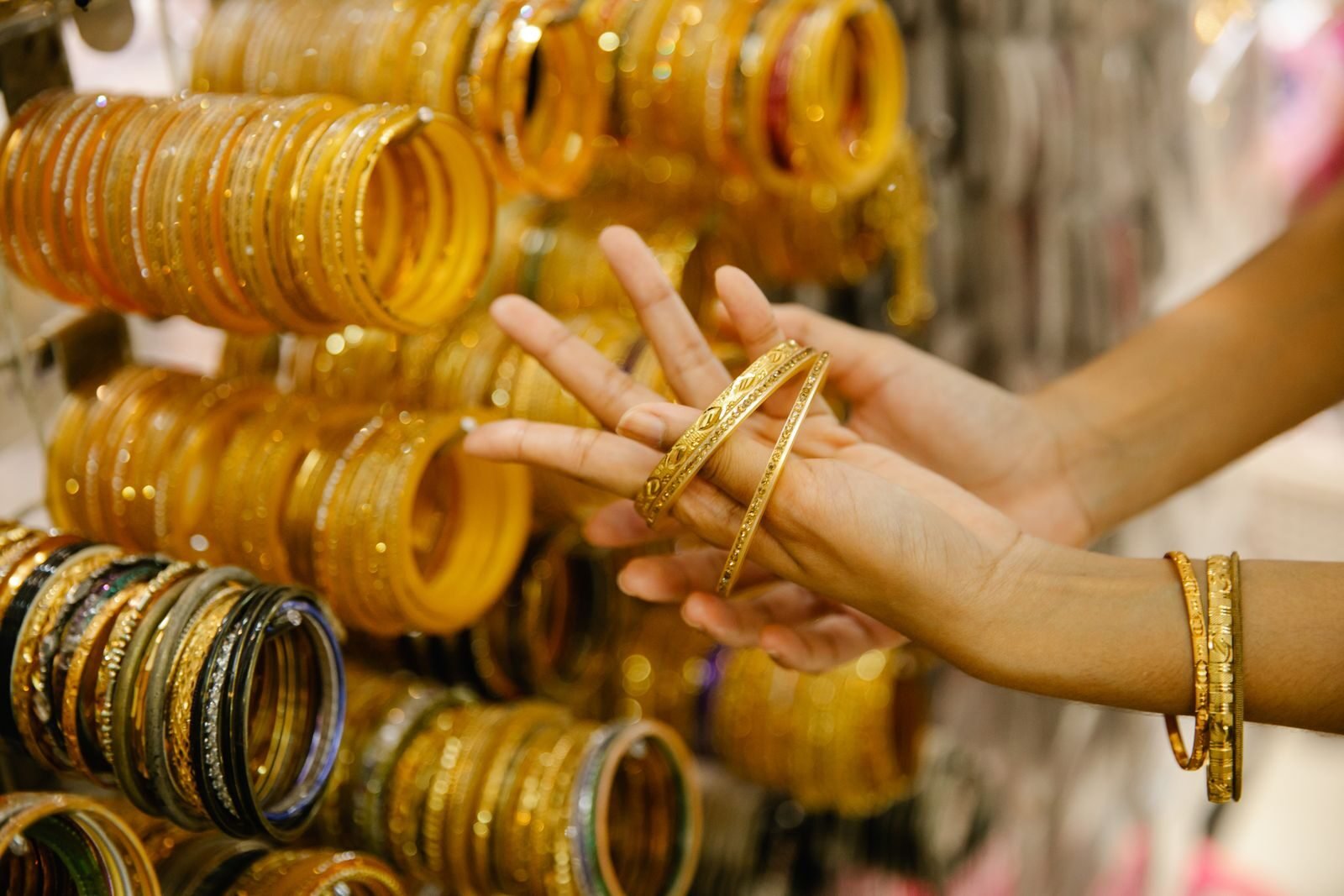
Gold at the Gold Souk Dubai is well regulated, and the vast majority of shops in the souk are honest traders. But a few checks take two minutes and protect you completely.
Check the hallmark. Genuine pieces are stamped with their carat, usually 22K or 21K for jewellery, and a reputable shop will point the stamp out to you. Ask the shop to weigh the piece in front of you, on a scale you can see. The weight on the scale should match the weight on the invoice.
Look at the shop itself. Large chains and small family jewellers trade side by side in the souk, and both can offer a good deal. Look for a shop that is busy with local buyers, not just tourists, and that has been there a while. A shop that rushes you, or that will not answer a direct question about weight or making charges, is telling you everything you need to know.
Ignore the touts in the lanes offering copy watches and handbags. They have nothing to do with the jewellers, and selling counterfeit goods is illegal in the UAE. If someone follows you offering a “special deal” away from the shops, keep walking.
For a large purchase, consider buying from a shop that is a member of the Dubai Gold and Jewellery Group, and keep every receipt and certificate with the jewellery, not in your checked luggage. If you are taking a large amount of gold home, check your own country’s customs allowance and declaration rules before you travel, because the limits change and a shop’s advice does not cover your arrival.
What about VAT and tourist refunds?
Since January 2018, the UAE applies 5 percent VAT on gold jewellery, calculated on the gold value plus the making charges. On a AED 10,000 purchase, that is AED 500. Investment grade gold, meaning 24 karat bars and coins, may qualify for the reverse charge mechanism, which effectively means zero VAT for the buyer in qualifying transactions. Ask the shop if this applies before you pay, because it only works for investment grade bullion, not for jewellery.
Visitors from outside the GCC can usually reclaim most of the VAT at the airport through the tax free scheme, if the shop is registered. Ask for a tax free tag when you pay, keep the receipt with you, and claim the refund at the airport before you fly. The refund is not automatic, and a purchase without a proper invoice and a tax free tag cannot be refunded. This Gold Souk shopping guide covers the same VAT and refund rules in detail.
What mistakes do first time buyers make?
The same few mistakes come up again and again. Walk in blind, without checking the day’s rate, and you have given away your only leverage. Pay the gold rate on gross weight, and you have paid gold price for stones. Accept the first making charge you are quoted, and you have paid the tourist price. Buy from the first shop you enter, and you have no comparison to judge the price against. Pay without an itemised invoice, and you have no proof of what you bought. Buy on a Friday morning, and you will find the shutters down, because the souk opens at 4 in the afternoon on Fridays.
The fix for all of these is the same: slow down, check the rate, ask for the breakdown, compare three shops, and get everything in writing. The Gold Souk rewards preparation. Walk in knowing the day’s rate and how bargaining works, and you will leave with beautiful gold at a fair price. More Dubai shopping guides live in our Shopping & Malls section, and gold jewellery sits alongside the jewellery guides in our Fashion section.
Is gold cheaper in Dubai than in other countries?
The gold rate follows the world price, so the metal itself costs about the same everywhere. Dubai is cheaper because there is no import duty on gold, making charges are negotiable, and the market is so competitive. The saving is in the making charge, not the gold rate.
What is the gold rate in Dubai today?
It changes every day. On 17 November 2026 the Dubai Gold and Jewellery Group board rate was AED 465.50 per gram for 24K and AED 431.00 for 22K. Check the live rate on your phone before you buy, because that figure is already out of date.
Can you bargain at the Gold Souk?
Yes. Bargaining is expected, and no shopkeeper is offended by a counter offer. The gold rate is fixed, but the making charge is fully negotiable, and most buyers get 20 to 40 percent off the quoted making charge.
What is a fair making charge at the Gold Souk?
Typically AED 5 to 15 per gram for plain coins and bars, AED 10 to 25 for simple chains and bangles, AED 20 to 40 for standard necklaces and rings, and AED 40 to 80 or more for intricate bridal work. Designer pieces can be AED 60 to 150 or more per gram.
What is the difference between gross weight and net weight?
Gross weight is the whole piece, gold plus stones, enamel and settings. Net weight is the gold alone. You should only pay the gold rate on the net weight, so always ask for it separately and in writing.
Is there VAT on gold in Dubai?
Yes, 5 percent VAT applies to gold jewellery, on the gold value plus the making charge. Investment grade 24 karat bars and coins may qualify for zero VAT under the reverse charge mechanism.
Can tourists claim VAT back on gold?
Usually yes. Visitors from outside the GCC can reclaim most of the VAT at the airport through the tax free scheme, if the shop is registered. Ask for a tax free tag and keep your receipt.
What are the Gold Souk opening hours?
Most shops open 10am to 10pm, Saturday to Thursday, and 4pm to 10pm on Friday. Many shops take a break from about 1pm to 4pm.
How do I get to the Gold Souk by metro?
Take the Green Line to Al Ras station or Gold Souq station. Both are about a five minute walk from the main entrance. From the Red Line, change at Union or BurJuman.
Is the Gold Souk Dubai safe for tourists?
Yes. It is one of the most visited markets in Dubai and the trade is well regulated. Ignore touts offering copy watches and handbags in the lanes, and only buy from a proper shop with an itemised invoice.
Should I pay cash or card at the Gold Souk?
Cash is usually better. Some shops add a 1 to 2.5 percent fee for card payments, and offering cash can earn you a better making charge. Carry small notes, and keep your receipts.
What karat of gold should I buy in Dubai?
22 karat is the standard for jewellery and the most common choice. 21 karat is also popular. 24 karat is for bars and coins, because it is too soft for most jewellery. 18 karat is used for diamond set and lighter pieces.
#GoldSoukDubai #DubaiGold #BuyGoldDubai #DeiraGoldSouk #GoldShopping #DubaiTravel
This collection is curated by the UAE Look Team, a group of writers covering fashion, travel, food and living in the UAE and across the Middle East. Our team checks every price, place and detail before publishing, so you get honest, practical guides for Dubai and beyond.
11 Responses